

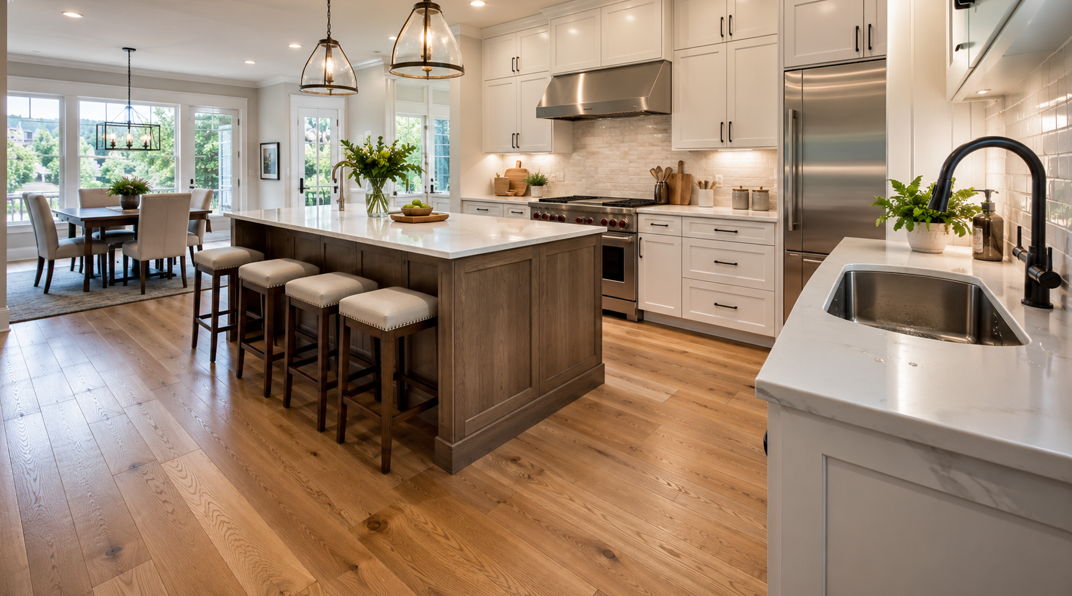
Why More Homeowners Want Hardwood in the Kitchen
The kitchen is one of the hardest-working rooms in any home. It’s where coffee gets poured, meals get cooked, pets wander through, kids drop snacks, and guests naturally gather during holidays and weekend get-togethers. For homeowners in Miamisburg and Centerville, the kitchen is often more than a place to cook. It’s the centre of daily life.
That’s why hardwood flooring is such a popular design choice. It brings warmth, character, and a timeless look that works beautifully with many kitchen styles. From classic cabinets in Centerville homes to open-concept layouts in Miamisburg remodels, hardwood can make a kitchen feel more inviting and connected to the rest of the house.
But there’s one big question homeowners often ask: can hardwood handle a kitchen?
The honest answer is yes, but only when the right product, finish, installation, and care routine come together. Kitchens bring moisture risks that bedrooms and living rooms usually don’t. Spills, sink splashes, dishwasher leaks, pet bowls, and Ohio’s seasonal humidity changes all matter. That does not mean hardwood is off the table. It means homeowners need to choose carefully.
For local homeowners comparing kitchen flooring options, Floorco Flooring offers quality products, knowledgeable guidance, and practical support for choosing floors that fit real homes, real routines, and real design goals.
Water-resistant hardwood options are designed to give homeowners the beauty of wood with added protection against everyday moisture. They are not a free pass to ignore spills or plumbing issues, but they can make hardwood a more realistic option for today’s busy kitchens.
What Water-Resistant Hardwood Really Means
Water-resistant hardwood is designed to handle everyday surface moisture better than traditional hardwood. That can include small spills, light splashes, damp mopping with approved products, or water tracked in from shoes. It does not mean the floor is completely waterproof.
That distinction matters. A water-resistant hardwood floor may give homeowners more peace of mind in a kitchen, but standing water can still cause damage if it sits too long. A leaking dishwasher, overflowing sink, or unnoticed pet bowl spill can still create issues. The goal is to choose flooring that provides added protection for normal kitchen life, not to treat hardwood like tile.
Water resistance usually comes from a combination of product construction, surface finish, edge treatment, and installation quality. Some hardwood products have protective coatings that help repel moisture on the surface. Others use engineered construction for better stability in rooms where humidity levels change.
In Miamisburg and Centerville, this matters because Ohio homes deal with real seasonal shifts. Summers can be humid. Winters can be dry. Indoor heating can lower moisture levels, while summer air can raise them. Wood naturally responds to these changes, so product stability is important.
A helpful way to think about water-resistant hardwood is this: it gives homeowners more time and more confidence. If someone spills a drink and wipes it up quickly, the floor is better prepared to handle that everyday moment. If damp footprints come in from the patio, the floor has more protection than untreated or poorly finished wood.
That balance is what makes water-resistant hardwood so appealing. It keeps the warmth and beauty homeowners love, while offering practical features for a room where moisture is part of daily life.
Best Hardwood Flooring Options for Kitchens
Not every hardwood floor is a strong fit for a kitchen. Homeowners need to think about product construction, finish, species, and how the space is used. The best choice depends on the household, but a few options tend to work better than others.
Engineered Hardwood
Engineered hardwood is often one of the best options for kitchens because it is built for greater dimensional stability. Instead of being one solid piece of wood, engineered hardwood has a real hardwood surface layer over a layered core. That structure helps it respond better to seasonal changes in humidity.
For Miamisburg and Centerville kitchens, this can be helpful. Ohio’s humid summers and dry winters can cause wood to expand and contract. Engineered hardwood is designed to handle those shifts more steadily than many solid hardwood products.
Engineered hardwood also gives homeowners a wide range of style choices. You can find oak, hickory, maple, walnut, and other wood looks in different plank widths, colours, and finishes.
Factory-Finished Hardwood
Factory-finished hardwood is another smart option. These floors are finished in a controlled manufacturing setting, which often creates a strong, consistent protective surface.
For kitchens, that durability matters. Factory finishes can help resist everyday wear from chairs, pets, shoes, and light spills. They also allow homeowners to see the final colour and sheen before installation, which makes design decisions easier.
Hardwood with Enhanced Surface Protection
Some hardwood products are made with advanced finishes or added surface protection designed to improve resistance against scratches, stains, and moisture. These options are worth considering for active kitchens.
Homeowners who want the beauty of hardwood flooring in a kitchen should focus on products that balance style with practical performance. A beautiful floor is important, but the product also needs to suit the way the room is used every day.
Engineered vs Solid Hardwood in the Kitchen
Solid hardwood has a long-standing reputation for beauty and longevity. It can be refinished multiple times and offers a classic, authentic feel. In many rooms, solid hardwood is an excellent choice. In kitchens, however, engineered hardwood often has the advantage.
The biggest reason is stability. Kitchens can experience more moisture exposure than living rooms or bedrooms. There may be steam from cooking, small spills near the sink, changing humidity levels, or damp traffic from nearby exterior doors. Engineered hardwood is built to manage movement more effectively because of its layered construction.
That does not mean solid hardwood never works in a kitchen. It can, especially when installed and maintained properly. But homeowners need to be realistic about care. Solid hardwood may be more sensitive to changes in moisture and humidity, so the product choice, finish, and installation need to be handled thoughtfully.
Here’s a simple breakdown:
Choose engineered hardwood if you want better stability in a kitchen.
Choose solid hardwood if you value traditional construction and refinishing potential.
Choose factory-finished products if you want a strong, consistent surface finish.
Choose water-resistant hardwood if your kitchen sees frequent spills, pets, or heavy daily use.
For many Miamisburg and Centerville homeowners, engineered hardwood offers the best balance of natural beauty and kitchen-friendly performance. It gives the room that warm wood look while helping reduce concerns around seasonal movement.
The choice also depends on the home’s layout. In open-concept homes, homeowners often want the same flooring to flow from the kitchen into the dining room or living area. Engineered hardwood can help create that seamless look while still being a practical option for the kitchen zone.
Hardwood Species That Make Sense for Busy Kitchens
The species of hardwood matters because some woods are naturally harder and more dent-resistant than others. Kitchens tend to see heavy foot traffic, dropped utensils, moving chairs, pet activity, and plenty of everyday wear. Choosing the right species helps the floor hold up better over time.
Oak
Oak is one of the most popular hardwood choices for kitchens, and for good reason. It has a classic grain pattern, good durability, and a timeless look that works with many cabinet styles. White oak is especially popular in modern kitchen designs because it can feel clean, warm, and natural without being too busy.
Oak also works well in Centerville homes where traditional and transitional design styles are common. It can look polished without feeling formal.
Hickory
Hickory is a strong option for homeowners who want a more rustic or character-rich floor. It has bold grain variation and natural colour movement, which can help hide small marks from daily use.
This can be a good fit for busy family kitchens, especially where pets and children are part of the household. Hickory’s lively appearance adds warmth and personality.
Maple
Maple has a smoother, more subtle grain than oak or hickory. It can work well in clean, modern kitchens where homeowners want a lighter, more consistent look.
Because maple can show scratches and dents differently depending on the finish, product selection matters. It is best to compare samples in person and talk through how the floor will be used.
Walnut
Walnut is rich, elegant, and warm, but it is generally softer than oak or hickory. It can be beautiful in lower-traffic kitchens or homes where design impact is the top priority. For very active kitchens, homeowners may want to discuss whether walnut fits their lifestyle before choosing it.
The best hardwood species is not always the hardest one. It’s the one that matches the home’s style, maintenance expectations, and daily activity level.
Finishes That Help Protect Hardwood Kitchen Floors
A hardwood floor’s finish plays a major role in how well it handles kitchen life. The finish is the protective layer that helps guard the wood against wear, light moisture, stains, and surface damage.
Matte and Satin Finishes
Matte and satin finishes are popular because they offer a softer, more natural appearance. They can also be more forgiving than high-gloss finishes when it comes to showing dust, footprints, and small scratches.
For kitchens in Miamisburg and Centerville, satin is often a practical middle ground. It gives the floor a clean, finished look without making every smudge stand out.
Textured Finishes
Wire-brushed, hand-scraped, or lightly textured finishes can help hide everyday wear. These styles are especially helpful in homes with pets, kids, or frequent gatherings.
Texture also adds character. A lightly wire-brushed oak floor, for example, can feel warm and stylish while still being practical for a busy kitchen.
Stain and Moisture-Resistant Coatings
Some hardwood products include finishes designed to resist staining and surface moisture better than basic finishes. These can be useful in kitchens where food spills, splashes, and regular cleaning are expected.
Still, homeowners should treat finish protection as a helpful feature, not a reason to delay cleanup. Even the best finish performs better when spills are wiped up quickly.
Factory-Applied Finishes
Factory-applied finishes are often very durable because they are applied under controlled conditions. This can create a strong protective surface and consistent appearance across each plank.
For many kitchen projects, factory-finished hardwood is a reliable choice because homeowners can enjoy a finished floor immediately after installation without waiting for on-site sanding and finishing.
Where Water-Resistant Hardwood Works Best in the Kitchen
Water-resistant hardwood can work beautifully in kitchens, but placement and habits still matter. Some areas of the room naturally face more moisture and wear than others.
Around the Main Kitchen Walkways
Main walkways see constant movement. Family members pass through with shoes, pets wander in and out, and guests gather while food is being prepared. A durable water-resistant hardwood product can help these high-traffic paths look polished and inviting.
Near Kitchen Islands
Kitchen islands are often the centre of the room. They collect bar stools, dropped crumbs, drink spills, and heavy use. Hardwood can look especially beautiful around an island because it adds warmth and contrast to cabinetry and countertops.
For homes with stools, it helps to use protective pads on chair legs and clean underneath seating areas regularly.
Open-Concept Kitchen and Living Spaces
In many Miamisburg and Centerville homes, the kitchen connects directly to dining and living areas. Hardwood is popular here because it creates one continuous visual flow.
Water-resistant hardwood can be a smart way to keep that seamless look while giving the kitchen portion of the space more practical protection.
Sink and Dishwasher Areas
These areas need the most caution. Water-resistant hardwood can handle everyday splashes better than standard products, but homeowners still need to wipe up water quickly and watch for leaks.
A small washable mat near the sink can help catch light splashes. It should be cleaned often and lifted regularly so moisture does not sit underneath.
Kitchen Design Ideas with Water-Resistant Hardwood
Hardwood flooring can completely change the look of a kitchen. The right colour, plank width, and grain pattern can make the space feel warmer, larger, brighter, or more refined.
Light Wood for Bright, Airy Kitchens
Light wood tones are popular in kitchens because they make the room feel open and fresh. White oak, natural oak, and soft beige-toned finishes pair well with white cabinets, light countertops, and modern fixtures.
This look works especially well in kitchens that do not get a lot of natural light. A lighter floor can help brighten the entire space.
Warm Brown for Classic Homes
Warm brown hardwood is timeless. It pairs beautifully with cream cabinets, painted islands, traditional trim, and classic kitchen layouts.
For Centerville homes with a more established or traditional style, warm brown floors can feel elegant without looking too formal.
Wide Planks for a Modern Remodel
Wide-plank hardwood gives kitchens a clean, updated look. It can make open spaces feel more expansive and reduce visual busyness on the floor.
This is a strong option for homeowners in Miamisburg who are updating older kitchens or creating a more open flow between rooms.
Textured Wood for Active Households
If your kitchen sees constant movement, textured hardwood can be a smart style choice. Wire-brushed or lightly distressed finishes help soften the appearance of everyday marks.
This does not mean the floor can be ignored. It simply means the design is more forgiving for real family life.
Matching Cabinets and Flooring
The floor does not need to match the cabinets exactly. In fact, contrast often looks better. Light floors can balance dark cabinets. Warm floors can soften white cabinets. Neutral wood tones can work with painted cabinets in blue, green, grey, or cream.
The best approach is to bring cabinet, countertop, and flooring samples together before making a final decision.
Care Tips for Hardwood Floors in Kitchens
Water-resistant hardwood is easier to live with when homeowners follow a simple care routine. The goal is to protect the finish, reduce moisture exposure, and keep the floor looking beautiful.
Start by wiping up spills quickly. Even when a product is water-resistant, standing water is never ideal. Keep a soft cloth or paper towel nearby for everyday kitchen messes.
Use mats thoughtfully. A mat near the sink can catch splashes, and a mat by exterior doors can reduce tracked-in grit. Choose breathable, floor-safe mats and clean underneath them regularly.
Sweep or vacuum often. Small crumbs and grit can act like sandpaper underfoot. A soft broom, microfiber mop, or hard-floor vacuum setting works well for regular cleaning.
Avoid soaking the floor. Hardwood does not need heavy water to look clean. Use approved cleaning products and follow manufacturer guidance.
Add felt pads to chair and stool legs. Kitchen seating can create scratches if furniture is dragged across the floor. Protective pads are simple and effective.
Watch pet bowls. Water dishes can splash throughout the day. Place bowls on a floor-safe mat and check the area often.
Keep indoor humidity steady when possible. Ohio’s seasons can be tough on wood floors. A consistent indoor environment can help reduce movement, gaps, or swelling.
These habits are not time-consuming, but they make a big difference. A beautiful hardwood kitchen floor stays at its best when daily care is simple and consistent.
Why Local Guidance Matters Before Choosing Kitchen Hardwood
Choosing hardwood for a kitchen is not the same as choosing it for a bedroom. Product construction, finish, moisture resistance, installation, and household habits all matter more in this room.
That’s why local guidance can be valuable. Homes in Miamisburg and Centerville vary widely. Some have older subfloors. Some have open-concept layouts. Some have kitchens near patios, garages, or mudrooms. Some households have pets, kids, and constant traffic. Others are looking for a polished design upgrade before selling or remodeling.
Seeing products in person also helps. Hardwood colour can shift depending on lighting, cabinet tones, wall colour, and nearby furniture. A floor that looks neutral online might feel warmer or cooler in your kitchen.
A local showroom gives homeowners the chance to compare samples, ask questions, and think through the practical details before committing. That includes questions like:
Will this product handle normal kitchen spills?
Is engineered hardwood better for this space?
What finish works best for pets and kids?
How will this colour look with my cabinets?
What maintenance routine does this floor need?
How does Ohio humidity affect this product?
The right hardwood floor should look beautiful, but it also needs to fit your lifestyle. A knowledgeable flooring team can help narrow the options so the final choice feels confident, not overwhelming.
Bring Warmth, Style, and Practical Protection Into Your Kitchen
Water-resistant hardwood gives Miamisburg and Centerville homeowners a way to bring natural warmth into the kitchen without ignoring the realities of daily life. It offers the beauty people love about wood, with added surface protection that can make kitchen use more practical.
The key is choosing carefully. Engineered hardwood often works well because of its stability. Factory-finished products offer strong surface protection. Durable species like oak and hickory can handle active households. Matte, satin, and textured finishes can help hide everyday wear while keeping the space stylish.
Still, no hardwood floor is maintenance-free. Spills need to be cleaned promptly, humidity should be managed where possible, and mats should be used wisely in splash-prone areas. With the right care, hardwood can be a beautiful and reliable choice for many kitchens.
For homeowners who want a kitchen that feels warm, welcoming, and connected to the rest of the home, water-resistant hardwood is worth considering. It can make the space feel finished, polished, and personal while still supporting the demands of everyday routines.
If you are planning a kitchen flooring upgrade in Miamisburg or Centerville, reach out to us for friendly, practical guidance from the Floorco Flooring team.


