

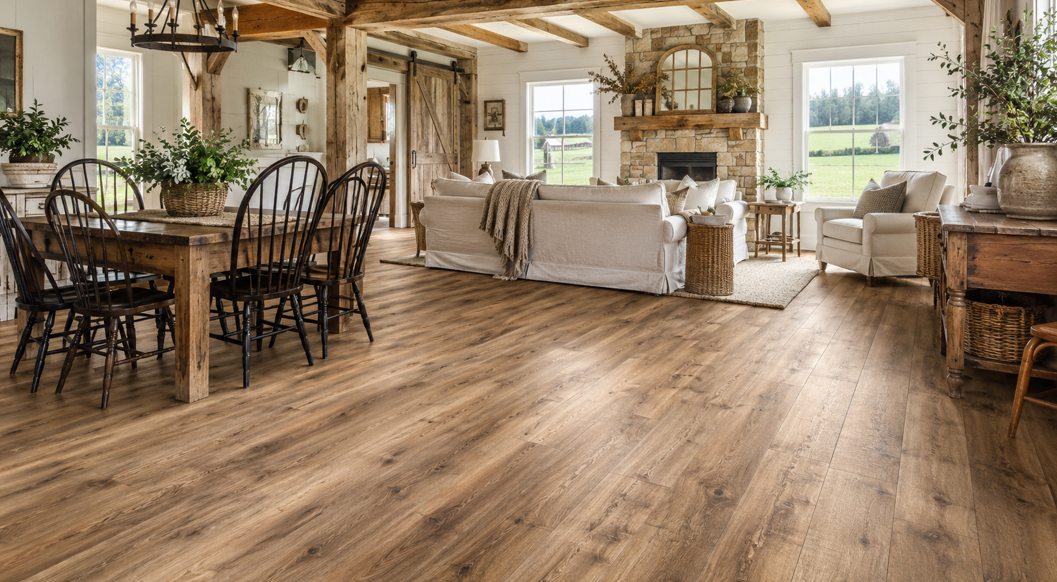
Rustic interiors feel at home in rural Ohio because they’re warm, relaxed, and built around materials that look lived-in rather than overly polished. For a farmhouse in Farmersville, a country-style home near Germantown, or a newer space that simply needs more character, the floor can do a lot of the visual work.
Laminate makes that look approachable because today’s designs can recreate the color variation, grain movement, knots, and weathered character associated with natural wood. You can get the cozy appearance of aged planks without turning every room into a museum piece. The right floor can still feel clean, current, and easy to live with.
At Floorco Flooring, homeowners throughout the Dayton area can compare flooring styles in person and get personalized guidance based on the room, household, and overall design goal. If you’re aiming for a rustic look, it helps to know which colors, plank visuals, and textures create character without making the space feel too busy.
What Makes Laminate Flooring Look Rustic?
Rustic flooring is less about one exact color and more about visual character. Think natural variation, visible grain, warm undertones, and details that make each plank look a little less uniform.
Some of the most common rustic-inspired features include:
Pronounced wood-grain patterns
Knots and mineral-streak visuals
Mixed light and dark tones
Wire-brushed or hand-scraped appearances
Weathered or reclaimed-wood styling
Wider plank visuals
Matte or low-sheen finishes
Natural-looking variation from plank to plank
Rustic Does Not Have to Mean Dark
Deep brown floors can create a classic farmhouse mood, but they aren’t the only option. Light oak, honey, tan, greige, and weathered natural tones can all fit a rustic interior.
Lighter rustic floors are especially useful when you want the room to feel open and airy. They also pair easily with white cabinets, black hardware, natural textiles, and wood furniture.
Darker floors create more contrast and can make a large room feel grounded. They work particularly well when the walls and cabinetry are lighter.
Texture Helps Create the Look
Visual texture matters almost as much as color. A smooth, perfectly uniform surface can feel more contemporary, while embossed grain or a distressed wood look adds the irregularity associated with rustic design.
1. Reclaimed Barnwood Looks for Maximum Character
If you want the floor to be one of the main design features, a reclaimed barnwood-inspired laminate is a natural place to start.
These styles often mix several brown tones with weathered details, saw-mark visuals, knots, or faded areas that resemble boards with a long history. They can work beautifully in living rooms, family rooms, dining areas, and open-plan spaces where the flooring has enough room to show its variation.
Keep the Rest of the Room Simple
A bold floor already brings a lot of movement. Pairing it with simpler finishes helps prevent the room from feeling crowded.
Consider:
Warm white or soft cream walls
Solid-color upholstery
Matte black or aged-bronze hardware
Simple shaker-style cabinetry
Natural linen or cotton textiles
Plain area rugs with subtle texture
Best for Homes That Embrace Imperfection
Reclaimed-style visuals work especially well when you like knots, color shifts, and a less uniform appearance. If your preferred look is crisp and symmetrical, a calmer oak visual may be a better fit.
The beauty of this style is that small everyday marks are less likely to dominate the overall look because the floor already has plenty of visual character.
2. Warm Oak Tones for a Classic Farmhouse Feel
Warm oak is one of the easiest rustic looks to use because it adds character without taking over the room.
Look for shades that sit between pale natural wood and medium brown. Honey, wheat, caramel, and soft golden-brown tones can make a space feel welcoming while still giving you plenty of flexibility with furniture and paint colors.
Why Warm Oak Is Easy to Decorate Around
Warm oak-inspired laminate works with many farmhouse staples:
White or cream cabinets
Natural wood tables
Black metal accents
Sage, olive, navy, and muted blue
Leather furniture
Woven baskets
Stone or brick details
It can also help bridge older and newer design elements. A home can have traditional trim, a modern sectional, and updated lighting without the floor feeling out of place.
Use Undertones Carefully
Before choosing a sample, look at the floor beside the finishes that will stay in the room.
A very yellow floor may clash with cool gray cabinets. A strongly red-brown floor may compete with cherry or mahogany furniture. A more balanced warm oak gives you greater freedom when the room contains several wood tones.
3. Weathered Brown and Greige for a Softer Rustic Look
Not every farmhouse-style interior needs golden wood tones. Weathered brown, taupe, and greige laminate can create a quieter rustic feel that works well with updated kitchens and transitional interiors.
These colors often look like wood that has naturally faded over time rather than freshly stained lumber.
A Good Match for Modern Farmhouse Details
Weathered neutral floors pair naturally with:
White cabinetry
Charcoal or black fixtures
Soft gray walls
Natural stone
Cream upholstery
Mixed wood furniture
Simple iron lighting
Avoid Going Too Cool
Very cool gray wood visuals can feel disconnected from the warmth typically associated with rustic interiors. If you like gray, consider a floor that still includes brown, beige, or natural wood undertones.
That small amount of warmth can make the floor feel more comfortable beside wood furniture, woven textures, and farmhouse-style cabinetry.
4. Wide-Plank Visuals for an Open, Relaxed Feel
Wide-plank flooring has a strong visual connection to rustic and farmhouse design. Laminate can recreate that appearance through wider board formats or patterns that emphasize broad wood visuals.
In open living areas, wider-looking planks can make the floor feel less busy because there are fewer visible seams and repeated lines across the room.
When browsing laminate flooring, pay attention not only to color but also to plank proportions and how frequently the grain pattern repeats. Those details can have a major effect on how convincing and relaxed the finished floor feels.
Let Wide Planks Show in Larger Rooms
A wide-plank look is especially effective in:
Great rooms
Open kitchens
Dining rooms
Long hallways
Connected living and kitchen areas
Consider Direction as Part of the Design
Plank direction can change how a room feels. Running the floor along the length of a space can emphasize that dimension, while keeping the same direction through connected rooms can create a smoother visual flow.
Installation decisions depend on the product and room conditions, so design goals and manufacturer requirements need to work together.
5. Hickory-Inspired Laminate for High Variation
If you want plenty of natural-looking contrast, hickory-inspired laminate can be a strong rustic option.
Hickory visuals often combine pale tan, medium brown, and darker grain markings within the same overall floor. That variation can create a casual, energetic look that feels right at home with farmhouse furniture and country-inspired interiors.
Use High Variation as the Main Feature
Because hickory-style floors can contain several tones, they pair best with finishes that don’t compete for attention.
Simple cabinets, solid countertops, and restrained wall colors give the flooring space to stand out.
A good rule of thumb is to decide where you want the eye to go. If the floor is highly varied, let it provide the pattern and keep the surrounding finishes calmer.
Helpful for Mixing Wood Furniture
One advantage of a varied floor is that it can connect furniture pieces that aren’t exactly the same color.
A dining table, sideboard, and chair legs can have slightly different wood tones and still feel coordinated when the flooring contains a similar mix of shades.
Where Rustic Laminate Works Best in a Farmhouse
The right rustic floor needs to work beyond the sample board. Think about how each room is used and what you want the floor to contribute visually.
Living Rooms and Family Rooms
Living spaces are ideal for showing off wood-look variation because there is usually enough exposed flooring to appreciate the full pattern.
A warm oak or reclaimed-wood visual can create a strong foundation for comfortable seating, textured rugs, wood furniture, and simple farmhouse accents.
Kitchens and Dining Areas
Rustic laminate can soften a kitchen filled with hard surfaces.
White cabinets with warm oak flooring create a familiar farmhouse combination, while greige or weathered-brown flooring can give the same kitchen a more updated look.
Before choosing a product for moisture-prone spaces, review its manufacturer-approved applications and water-resistance guidance. Laminate products can vary in how they are designed to handle spills and everyday moisture.
Mudrooms and Entry Areas
Farmhomes and rural properties often see plenty of outdoor traffic. Entry areas may deal with dirt, grit, wet shoes, and seasonal debris, so appearance and practical care both matter.
Rustic floors with visible grain and tonal variation can be forgiving from a design standpoint because every small speck doesn’t contrast against a perfectly uniform surface.
Entry mats and regular cleaning can help reduce the grit carried farther into the home.
Bedrooms and Home Offices
You don’t need bold reclaimed visuals everywhere.
Bedrooms and offices can benefit from quieter rustic styles, such as natural oak or muted brown. They keep the warmth of wood-look flooring without making smaller rooms feel visually crowded.
How to Match Rustic Laminate With Farmhouse Colors and Materials
The floor is one piece of the room, so think about how it will interact with cabinets, walls, furniture, and architectural details.
White and Cream
White cabinetry and warm wood-look laminate are a classic combination because the contrast keeps both finishes visible.
Cream creates a softer effect, especially with honey oak, caramel, or medium-brown floors.
Green and Muted Blue
Sage, olive, dusty blue, and navy can bring color into a rustic space without overpowering the wood look.
These shades work particularly well when the floor has warm or natural undertones.
Black Metal Accents
Black lighting, cabinet pulls, faucets, and furniture frames provide crisp contrast against rustic laminate.
A small amount can make a traditional farmhouse palette feel more current.
Natural Stone and Brick
Stone fireplaces, brick details, and stone-look counters already contain natural variation. Choose flooring that complements those colors instead of trying to match every shade exactly.
If the stone is visually busy, a simpler laminate pattern can keep the room balanced.
Mix Wood Tones Instead of Matching Everything
Trying to match every wood surface exactly can make decorating harder than it needs to be.
A more natural approach is to repeat undertones. If your floor is a warm medium brown, furniture can be lighter or darker as long as the pieces share some warmth.
Practical Features Matter as Much as Rustic Style
A floor can look perfect in a showroom and still be the wrong fit for the household. Before settling on color and grain, consider how the room is used every day.
Think About Foot Traffic
Busy family areas need flooring selected with daily activity in mind. Ask about wear ratings, manufacturer warranties, and the intended residential use of the specific laminate you’re considering.
For homes with active children, frequent guests, or pets, durability may be every bit as important as color.
Consider Pets
Wood-look laminate can be an appealing choice for pet-friendly interiors, but individual products differ.
Matte finishes and varied grain patterns can make everyday marks less visually obvious than very dark, glossy, uniform floors.
Regular nail care and prompt cleanup around water bowls can also support long-term appearance.
Plan for Rural Dirt and Grit
Homes in and around Farmersville and Germantown may have yards, gravel drives, gardens, workshops, or outdoor areas that naturally bring more debris toward entry doors.
Good mats, routine sweeping or vacuuming, and manufacturer-approved cleaning help keep abrasive grit from being tracked across the floor.
Pay Attention to Moisture
Kitchens, entryways, laundry spaces, and basements need extra consideration because moisture exposure can be different from a typical bedroom or living room.
Check the exact product’s installation and care instructions rather than assuming every laminate handles water the same way.
How to Keep a Rustic Floor From Looking Too Busy
Rustic design works best when it feels relaxed, not crowded.
If your floor has strong knots, saw marks, and multiple colors, give the eye somewhere to rest. Plain walls, simple cabinetry, and solid upholstery can provide that balance.
If your home already has several statement elements, such as exposed beams, patterned tile, a large stone fireplace, and heavily grained furniture, choose a laminate with gentler variation.
Repeat Two or Three Key Tones
Pull a few colors from the floor and repeat them elsewhere.
For example, a plank with tan, medium brown, and charcoal details might work with:
Tan leather seating
A medium wood dining table
Black lighting or cabinet hardware
That repetition makes the room feel intentional without requiring exact matches.
Order Samples Before Making the Final Decision
View your favorites in the room during both daytime and evening. Place them beside cabinets, trim, furniture, and any materials that will remain.
The right rustic laminate should feel like part of the home, not an isolated design choice.
Bring Rustic Character Home Without Overdoing It
Rustic laminate flooring can give a Farmersville or Germantown home warmth, texture, and farmhouse character while still feeling fresh and practical.
The most successful designs start with balance. Reclaimed barnwood visuals make a bold statement. Warm oak offers an easygoing classic look. Weathered neutrals suit updated farmhouse interiors, while hickory-inspired styles bring strong color variation. Wide-plank visuals can make open rooms feel calm and connected.
Whichever direction you prefer, consider the whole space before choosing. Look at undertones, cabinetry, wall colors, furniture, room size, daily traffic, pets, moisture exposure, and manufacturer care requirements. A floor that works with your lifestyle is far more likely to stay beautiful and feel right for years.
Floorco Flooring offers a large selection of flooring styles and experienced guidance for homeowners throughout Miamisburg, Dayton, and surrounding communities. If you’re planning a rustic flooring update in Farmersville, Germantown, or elsewhere in the Miami Valley, reach out to us for help finding a laminate style that fits your home.


