

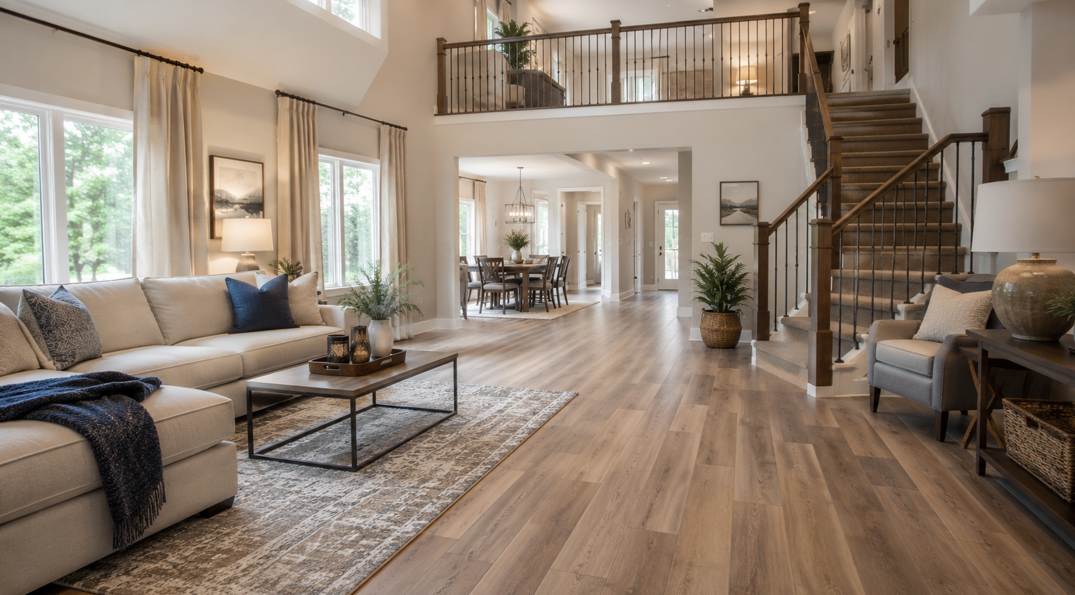
Why Sound Matters in Multi-Level Dayton Homes
In a multi-level home, flooring is not only about how a room looks. It also affects how the home sounds. If you have bedrooms above a living room, a finished basement below the main floor, or a second-floor hallway that gets a lot of foot traffic, you already know how easily sound can travel.
Footsteps, pets running down the hall, kids playing upstairs, rolling office chairs, dropped toys, and everyday movement can feel louder when the flooring is not planned properly. That does not mean you need to avoid hard-surface floors. It means you need to choose the right materials, the right underlayment, and the right installation approach.
Laminate flooring is a popular choice for Dayton homeowners because it offers stylish wood-look designs, strong durability, and easier maintenance than many traditional flooring options. For multi-level homes, it can also be a practical choice when sound control is part of the planning process.
For homeowners looking at flooring upgrades across the Dayton area, Floorco Flooring offers helpful local guidance, quality products, and practical installation support for homes that need both beauty and everyday performance.
The key is knowing what makes one laminate floor quieter than another. Product thickness, core construction, attached padding, underlayment, subfloor condition, and room layout all play a role. A quiet floor is rarely about one feature alone. It comes from a smart combination of product choice and proper installation.
For Dayton’s multi-level homes, townhomes, split-level layouts, and finished basements, that combination can make a big difference in how comfortable the home feels every day.
What Makes Laminate Flooring Noisy?
Laminate flooring can sound noisy when the product, underlayment, or subfloor is not suited to the space. The most common issue is impact sound. That is the sound made when footsteps, pet nails, dropped objects, or moving furniture create vibration through the floor.
In multi-level homes, those vibrations can travel into the rooms below. A second-floor hallway might sound sharp from a bedroom underneath. A playroom above a finished basement might create more noise than expected. Even a home office with a rolling chair can create sound if the flooring system is not planned well.
Another factor is the subfloor. If the subfloor is uneven, loose, or not properly prepared, laminate planks may move slightly underfoot. That movement can create clicking, hollow sounds, or an overall louder feel. This is why professional preparation matters, especially in older Dayton homes where subfloors may have settled over time.
Room size also affects sound. Large open spaces can create more echo than smaller rooms with rugs, curtains, furniture, and soft decor. A laminate floor in an empty room may sound louder than the same floor after furniture and area rugs are added.
Sound can also be affected by the product itself. Thin laminate may feel and sound different from thicker, higher-quality laminate. Products with a dense core and quality padding tend to feel more stable and can help reduce some everyday noise.
The goal is not to make laminate silent. No hard-surface floor is completely soundless. The goal is to choose quiet laminate flooring features that help soften everyday movement and make the home feel more comfortable.
The Best Quiet Laminate Flooring Features to Look For
If sound control is a priority, homeowners should look beyond color and plank style. The visual design still matters, but the floor’s construction and support system are what make it feel quieter underfoot.
Thicker Laminate Planks
Thicker laminate planks often feel more stable than thinner options. A thicker product can help reduce that lightweight, hollow sound some homeowners associate with lower-quality laminate. It may also feel more comfortable underfoot, especially in upstairs hallways, bedrooms, and family spaces.
Thickness is not the only factor, but it is worth considering. A thicker plank paired with the right underlayment can create a more solid and comfortable walking experience.
Dense Core Construction
The core is the main body of the laminate plank. A denser core can help the floor feel more substantial. It may also help reduce some of the sharp sounds caused by footsteps and movement.
When comparing products, homeowners should ask about core quality, durability, and whether the floor is suitable for upper-level installation. This is especially important for homes with active families or pets.
Attached Pad Options
Some laminate products come with padding already attached to the plank. This can help simplify installation and support a softer feel underfoot. However, not every attached pad provides the same level of sound control.
Homeowners should avoid assuming that attached padding automatically solves every noise concern. It can help, but the product still needs to be matched to the room, the subfloor, and the household’s needs.
Compatible Underlayment
Underlayment is one of the most important parts of a quieter laminate floor. It sits between the laminate and the subfloor, helping with comfort, sound control, and support.
A quality underlayment can help reduce the sound of footsteps in the room and limit some sound transfer to the level below. The right choice depends on the product requirements and the type of subfloor.
Proper Installation System
Even the best laminate floor can sound louder if it is not installed correctly. Proper spacing, smooth transitions, subfloor preparation, and correct underlayment placement all matter.
A quiet floor starts before the first plank goes down.
Understanding Underlayment for Sound Control
Underlayment can make a major difference in how laminate flooring sounds and feels. It is the layer that helps cushion the flooring system and create a better barrier between the laminate and the subfloor.
For multi-level homes in Dayton, underlayment is especially important because sound can travel from one floor to another. If laminate is installed on an upstairs level without the right support, footsteps may feel sharper and louder in the room below.
There are several types of underlayment homeowners may come across.
Foam Underlayment
Foam underlayment is common and often affordable. It can provide basic cushioning and help smooth out minor surface variation. It may be suitable for some rooms, but homeowners looking for stronger sound control may want to compare upgraded options.
Felt Underlayment
Felt underlayment is denser and often better at softening sound. It can help the floor feel more solid and comfortable. For upstairs rooms, hallways, and multi-level layouts, felt can be a smart option when it is compatible with the laminate product.
Rubber or Acoustic Underlayment
Acoustic underlayment is designed specifically to help reduce sound. Some products use rubber, cork, or specialty materials to help absorb impact noise and improve overall comfort.
These options may be especially useful in second-floor bedrooms, home offices, playrooms, or finished rooms above living areas.
Moisture Barrier Considerations
Some rooms may also need moisture protection. This is especially relevant for finished basements or areas over concrete. Dayton homes can experience seasonal humidity changes, and basements may have their own moisture concerns.
The right underlayment should match the room, subfloor, and laminate product. Homeowners should not mix random materials together without checking compatibility, because the wrong underlayment can affect performance and product warranty.
Quiet Laminate Flooring for Second-Floor Bedrooms
Second-floor bedrooms are one of the most common places where homeowners want quieter flooring. Bedrooms need to feel calm, comfortable, and private. If footsteps from one bedroom carry into another room or down into the main level, the flooring can become a daily frustration.
Laminate flooring can work well in upstairs bedrooms when sound control is built into the plan. A thicker laminate product, a dense core, and the right acoustic underlayment can help create a more comfortable room.
Bedroom furniture also helps reduce sound. Beds, dressers, curtains, upholstered chairs, and area rugs all soften the space. A laminate floor in a furnished bedroom will usually sound different from one in an empty room.
For kids’ rooms, sound control becomes even more important. Children may run, jump, drop toys, or move furniture during play. Laminate is attractive because it is easy to clean and durable, but the right underlayment helps make it more suitable for upper-level family spaces.
For guest rooms, laminate can create a polished and welcoming look. It also makes cleaning simple between visitors. A soft area rug beside the bed can add warmth while still keeping most of the floor easy to maintain.
Homeowners should also think about hallway transitions near bedrooms. A quiet bedroom floor helps, but if the hallway outside is loud, the overall experience may still feel disruptive. Planning the entire upper level together often creates the best result.
The goal is to make upstairs spaces feel peaceful without giving up the beauty and convenience of hard-surface flooring.
Quiet Laminate Flooring for Upstairs Hallways and Stairs
Upstairs hallways often create more noise than homeowners expect. They connect bedrooms, bathrooms, closets, and stairways, which means they see repeated foot traffic throughout the day and night. In a multi-level home, that sound can travel quickly to the rooms below.
Laminate flooring can be a strong option for upstairs hallways because it is durable and easy to clean. But if quiet performance matters, homeowners need to think carefully about product selection and installation.
A thicker laminate plank can help the hallway feel more stable. A quality acoustic underlayment can help soften impact sound. Proper subfloor preparation is also important because hallway traffic can highlight loose spots, uneven areas, or movement under the floor.
Stairs require even more attention. Laminate on stairs needs the correct stair nosing, secure installation, and careful finishing at each step. Because stairs naturally create footfall noise, product selection and installation quality matter a lot.
In many homes, adding a stair runner may also help soften sound and improve comfort. This can be especially helpful for families with children, pets, or older adults who want added traction and a quieter stairway.
Hallways are also good places for washable runners. A runner can reduce footstep noise, protect the laminate surface, and add style. It is important to choose rug pads that are safe for laminate flooring.
For Dayton homes with second-floor bedrooms, upstairs laundry areas, or busy family traffic, quiet hallway flooring can make the entire home feel more settled. It is one of those upgrades that people notice every day, even if they do not always think about why the home feels more comfortable.
Quiet Laminate Flooring for Finished Basements
Finished basements are common in many Ohio homes, and they often become family rooms, playrooms, guest spaces, home offices, or workout areas. Laminate flooring can be appealing in these spaces because it offers a clean, finished look with easier maintenance than soft flooring.
Sound behaves differently in basements than it does upstairs. Instead of worrying only about noise traveling down, homeowners may also think about echo, comfort, and how the floor feels over concrete.
Concrete subfloors can make a floor feel harder and louder if the right underlayment is not used. A suitable underlayment can help create a more comfortable surface and reduce some hollow sounds. If moisture is a concern, the underlayment may also need an appropriate moisture barrier.
This is where product compatibility matters. Not every laminate product is recommended for every basement. Homeowners should look for flooring designed for the conditions of the room and follow manufacturer guidance closely.
In a basement family room, soft furnishings can help manage sound. Sofas, rugs, curtains, storage pieces, and wall decor all help reduce echo. If the basement is mostly empty or has hard walls and ceilings, any hard-surface flooring may sound louder.
For playrooms, durable laminate with a softer underlayment can be a practical combination. It gives children a surface that is easy to clean while helping reduce the sharp sound of toys and movement.
For home gyms or workout rooms, homeowners should be realistic. Heavy equipment, dropped weights, and high-impact movement may require additional mats or a different flooring solution in certain zones.
Finished basements need flooring that is stylish, stable, and suited to the room’s conditions. With the right planning, laminate can be a comfortable and attractive choice.
Choosing Laminate Flooring for Home Offices and Multi-Level Workspaces
More Dayton homeowners are using spare bedrooms, finished basements, and upstairs lofts as home offices. These spaces need flooring that looks professional, cleans easily, and supports daily use.
Laminate flooring works well in many home offices because it creates a polished look and pairs nicely with desks, shelving, and office furniture. It is also easier to clean than many soft surfaces, which is helpful in rooms used every day.
Sound control matters in home offices for two reasons. First, footstep noise can be distracting if other people are working, studying, or sleeping nearby. Second, rolling office chairs can create repeated movement and sound across the floor.
A quality laminate product with a stable core can help the room feel more solid. A compatible acoustic underlayment can also soften everyday movement. Homeowners should use chair mats designed for hard-surface flooring to help protect the laminate and reduce chair noise.
For upstairs offices, the room below matters too. If the office sits above a living room, bedroom, or nursery, sound control becomes more important. In that case, the underlayment choice should be discussed before installation.
Style also matters. Light wood-look laminate can make a small office feel brighter and more open. Medium brown tones can create a warmer, more traditional workspace. Wide planks can help a home office feel updated without becoming too busy visually.
Home offices need to feel focused and comfortable. The right laminate flooring can give the space a clean, stylish foundation while supporting the practical needs of daily work.
How Installation Affects Laminate Flooring Noise
Installation has a major impact on how quiet laminate flooring feels. A good product can still sound louder than expected if the subfloor is uneven, the underlayment is poorly placed, or the planks do not have the proper room to move.
Subfloor preparation is one of the biggest factors. The surface below the laminate needs to be clean, level, and stable. If there are dips, humps, squeaks, or loose areas, those issues may affect how the finished floor sounds.
Proper expansion spacing is also important. Laminate flooring responds to indoor conditions, including Ohio’s humid summers and dry winters. If the floor does not have enough space around the edges, it may press against walls or fixed objects as conditions change. That can lead to noise, movement, or performance concerns.
Underlayment placement matters too. It needs to be installed smoothly and according to product instructions. Overlapping, bunching, or using the wrong underlayment can create problems.
Transitions are another detail that can affect sound. Doorways, stair landings, closets, and room changes all need careful finishing. If these areas are not handled well, the floor may feel less stable.
Professional installation helps homeowners avoid common issues. Installers can evaluate the subfloor, recommend suitable materials, and handle tricky areas like stairs, corners, and transitions.
For multi-level homes, the installation plan should include sound control from the beginning. It is much easier to choose the right product and underlayment before installation than to correct noise concerns later.
A quieter laminate floor depends on the full flooring system, not just the planks.
Extra Ways to Reduce Noise After Installation
Even with the right laminate flooring and underlayment, a few simple choices can make a home feel quieter. Sound control is often about layering practical solutions.
Area rugs are one of the easiest ways to soften sound. In bedrooms, family rooms, playrooms, and hallways, rugs can reduce footstep noise and make the space feel warmer. Use rug pads that are safe for laminate flooring to help keep rugs in place and protect the surface.
Furniture also helps absorb sound. Sofas, beds, bookshelves, curtains, and upholstered pieces can reduce echo, especially in open rooms. An empty room with laminate may sound sharp, while a furnished room usually feels much quieter.
Felt pads under furniture legs are another simple upgrade. They help reduce scraping sounds and protect the floor from scratches. This is especially useful for dining chairs, stools, desks, and movable furniture.
For pets, keeping nails trimmed can help reduce tapping sounds on hard-surface floors. Pet beds and washable mats can also soften sound in areas where pets spend the most time.
In home offices, chair mats can reduce rolling noise and protect the laminate surface. In playrooms, soft play mats can help reduce toy noise while keeping the room easy to clean.
Household habits can help too. Removing shoes indoors, using entry mats, and keeping grit off the floor can make movement quieter and help protect the finish.
These small choices do not take away from the beauty of laminate flooring. They simply help the home feel more comfortable, especially in multi-level layouts where sound travels more easily.
The Best Style Choices for Quiet Laminate Floors
Quiet performance is important, but style still matters. A floor should support the way a home sounds and the way it looks. Luckily, modern laminate gives Dayton homeowners many design options.
Wide-plank laminate is a strong choice for open spaces and multi-level homes. Wider planks can create a clean, updated look with fewer visual lines across the room. They work well in living rooms, bedrooms, finished basements, and home offices.
Light oak and natural wood looks are popular for homes that need a brighter, more open feel. These tones can make smaller upstairs bedrooms or basement spaces feel less closed in.
Medium brown wood-look laminate is a versatile choice for family homes. It adds warmth without feeling too dark and works well with many furniture styles.
Textured laminate can also be helpful. A subtle texture can add depth and make the floor feel more natural underfoot. It can also be more forgiving in busy homes with pets and kids.
Matte finishes are often a practical choice because they do not show every footprint or small mark as clearly as glossier finishes. In active households, that can help the floor look cleaner between regular maintenance.
For Dayton homes with multiple levels, it may also help to use the same or similar laminate across connected areas. This creates a smooth visual flow from hallways to bedrooms or from main living spaces to finished basements.
The best style is the one that balances comfort, sound control, durability, and the overall look of the home.
When to Visit a Local Flooring Showroom
Quiet laminate flooring is easier to choose when you can compare products in person. Online photos are useful, but they cannot always show plank thickness, texture, finish, sound feel, or product quality.
A showroom visit lets homeowners see how different laminate options look under real lighting. It also gives them a chance to compare attached pads, underlayment options, plank thicknesses, and color choices side by side.
This is especially helpful for multi-level homes because sound concerns depend on more than the floor’s appearance. Homeowners can ask practical questions about upstairs installation, basement use, stair details, underlayment compatibility, and product performance.
Local guidance matters in Dayton because homes vary widely. Some homes have older subfloors. Some have finished basements. Some have second-floor laundry rooms or busy upstairs hallways. Some families need quiet flooring for children, pets, remote work, or shared living spaces.
A knowledgeable flooring team can help narrow the options based on the way the home is actually used. That makes the process more direct and less overwhelming.
The right showroom experience should help homeowners compare beautiful, durable, and practical flooring choices without feeling pressured. The goal is to choose a floor that looks good, sounds better, and works for everyday life.
Make Every Level of Your Home Feel More Comfortable
Quiet laminate flooring is not about making a home completely silent. It is about reducing sharp, disruptive everyday noise and creating a more comfortable living environment across every level of the home.
For multi-level homes in Dayton, the right laminate flooring can make upstairs bedrooms feel calmer, hallways feel more settled, finished basements feel more comfortable, and home offices feel more focused. The product matters, but so does the full flooring system.
Look for thicker planks, dense core construction, quality attached padding, and compatible acoustic underlayment. Pay close attention to subfloor preparation and professional installation. Then support the floor with simple finishing touches like rugs, furniture pads, chair mats, and soft decor.
Laminate flooring can give homeowners the beauty of wood-look design with the durability and easy care that busy households need. When planned carefully, it can also help manage sound in homes where people live, work, play, and relax on multiple levels.
If you are planning a flooring upgrade for a multi-level home in Dayton, reach out to us for friendly, practical guidance from the Floorco Flooring team.


