

Can Laminate Flooring Work With Radiant Heat?
On a cold Miami Valley morning, a warm floor can make a room feel noticeably more comfortable. Radiant floor heating delivers heat from below the finished surface, creating steady warmth without relying entirely on vents or baseboards. For homeowners who like the look, durability, and value of laminate, that raises an important question: can the two systems work together?
In many cases, the answer is yes. Laminate flooring can be installed over radiant heat when the flooring, underlayment, heating system, and installation method are compatible. The key is choosing a laminate product that the manufacturer specifically approves for radiant heating.
Not every laminate collection is suitable. Two floors may look nearly identical in a showroom but have different core materials, thicknesses, temperature limits, and warranty requirements. Product documentation matters more than appearance when confirming compatibility.
Homeowners can visit Floorco Flooring for local guidance when comparing flooring products for a radiant-heating project. The team can help evaluate style, room use, subfloor conditions, and installation requirements before a final decision is made.
Radiant heat may suit bedrooms, kitchens, family rooms, additions, and finished basements. Successful performance begins with planning because every layer beneath the visible floor must work as part of one complete system.
How Radiant Floor Heating Works
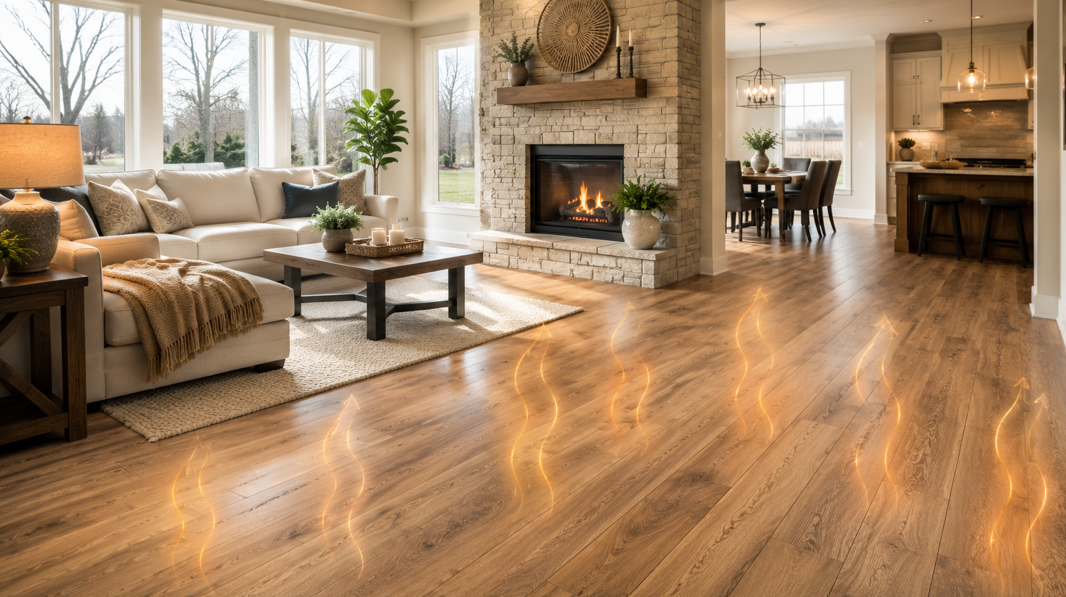
Radiant heating warms the floor from underneath. Heat then travels upward through the floor assembly and into the room.
Unlike forced-air systems, radiant systems warm surfaces directly. Many homeowners appreciate the even feel and fewer noticeable hot and cold areas.
Electric Radiant Heating
Electric radiant systems typically use cables, wires, or heating mats placed below the finished flooring. They are often used in individual rooms, additions, or renovation projects where homeowners want extra warmth underfoot.
These systems need appropriate controls. A thermostat may regulate the room, while a floor sensor can help keep the surface within the laminate manufacturer’s limit. A system approved beneath tile is not automatically approved beneath laminate.
Hydronic Radiant Heating
Hydronic systems circulate heated water through tubing installed below the floor. They are commonly associated with larger areas, whole-home systems, new construction, and major renovations.
The tubing may be installed within concrete, beneath a subfloor, or in specially designed panels. Compatibility depends on whether the system can maintain the laminate manufacturer’s temperature limits.
How Heat Travels Through the Floor
Heat must pass through the subfloor, moisture-control materials, underlayment, and laminate before reaching the room. Each layer creates some resistance to heat flow.
A thick or highly insulating underlayment can slow heat transfer. The best assembly balances comfort, sound control, moisture management, and efficient heat movement.
What Makes Laminate Suitable for Radiant Heating?
Radiant-heat compatibility is a product-specific feature. Homeowners should look for written approval in the installation guide, technical data, or warranty documents.
Manufacturer Approval
The most important requirement is clear confirmation that the exact laminate product can be installed over radiant heating.
Documentation may specify:
Which heating systems are allowed
Whether the system must be embedded in the subfloor
The maximum permitted surface temperature
Required moisture testing
Approved underlayment options
Start-up and operating procedures
Indoor temperature and humidity conditions
If the product information does not address radiant heat, ask for written clarification before purchasing.
Stable Core Construction
The core gives laminate much of its structure. A high-quality core helps the planks remain stable as indoor temperature and humidity change.
Core quality alone does not prove compatibility. The exact product still needs approval for radiant heat.
Appropriate Thickness
Flooring thickness affects how the floor feels and how quickly heat moves into the room. A thicker plank can feel substantial underfoot, but additional material may increase thermal resistance.
A thinner plank is not automatically better. Evaluate thickness alongside the underlayment, subfloor, heating output, and installation requirements.
Reliable Locking System
Most laminate is installed as a floating floor. The planks connect through locking joints while the floor rests above the underlayment without being fastened directly to the subfloor.
A well-designed locking system supports a smooth surface, but it does not eliminate normal expansion and contraction. Perimeter space is still required.
Warranty Protection
Before buying, homeowners should confirm that radiant heating does not exclude the product from warranty coverage.
Coverage may depend on using approved materials, documenting moisture levels, following temperature restrictions, and increasing heat gradually after installation. These details may seem minor, but they protect both the floor and the homeowner’s investment.
Choosing Laminate for a Radiant-Heated Room
After confirming compatibility, homeowners can compare appearance, durability, room use, and maintenance needs.
Match the Floor to the Room
A quiet bedroom does not have the same demands as a kitchen, entryway, family room, or finished basement.
Consider:
Daily foot traffic
Pets and children
Furniture movement
Potential spills
Exposure to tracked-in moisture
Cleaning routines
Direct sunlight
Large rugs or floor coverings
A product designed for active living areas may offer stronger wear, scratch, and stain resistance. In a lower-traffic space, visual style and comfort may carry more weight.
Review Durability Features
Useful features may include wear resistance, textured surfaces, reinforced edges, stain protection, and suitability for residential or light commercial use.
No single rating tells the whole story. A strong product should combine durability with the correct technical approvals, warranty terms, and maintenance expectations.
Choose a Style That Fits the Home
Modern laminate can recreate the appearance of oak, hickory, maple, and other wood species in a wide range of colors and plank sizes.
Light natural tones can help smaller rooms feel open and bright. Mid-tone browns often suit traditional homes throughout Dayton, Oakwood, Kettering, and nearby communities. Wider planks can create a clean, contemporary look, while more varied grain patterns can add character.
Bring samples into the room before deciding because wall color, natural light, and furnishings can change the appearance.
Homeowners can explore Floorco’s selection of laminate flooring while checking which products are approved for the planned heating system.
Keep Moisture Resistance Separate From Heat Compatibility
Moisture resistance and radiant-heat compatibility are different product qualities.
A water-resistant laminate is not automatically approved for radiant heat. Likewise, a radiant-compatible laminate is not automatically suitable for standing water, plumbing leaks, or unresolved subfloor moisture.
Both factors need attention in kitchens, laundry rooms, bathrooms, entrances, and finished basements.
Underlayment and Subfloor Requirements
The visible planks are only one part of the finished floor. The layers beneath them influence heat transfer, sound, stability, and moisture protection.
Choose the Right Underlayment
Underlayment is the thin material installed between the laminate and the prepared subfloor. Depending on the product, it may reduce sound, improve underfoot feel, support the locking system, or help manage vapor.
For a radiant-heated floor, underlayment also needs suitable thermal performance. A thick foam product may trap more heat beneath the laminate and reduce the system’s response.
Use an underlayment that is approved by the laminate manufacturer and suitable for the radiant system. Some laminate includes attached padding. An unapproved second layer can affect floor height, joint performance, heat transfer, and warranty coverage.
Prepare Concrete Subfloors
Concrete can contain moisture even when the surface appears dry. Proper testing helps determine whether the slab meets the laminate manufacturer’s requirements.
A vapor-control material may be necessary, especially below grade. Radiant heat can make a finished basement more comfortable, but it does not correct water intrusion, poor drainage, cracks, or excessive slab moisture.
Inspect Wood Subfloors
Wood subfloors should be clean, dry, stable, and sufficiently flat. Loose panels, raised fasteners, movement, damaged sections, or uneven seams may need repair.
Radiant heat will not correct an uneven or unstable base. Careful preparation supports better locking-joint performance and reduces the chance of movement or noise after installation.
Plan for Finished Floor Height
The heating components, underlayment, and laminate all contribute to the final height of the floor.
That height can affect:
Interior and exterior doors
Appliances
Cabinets
Stair transitions
Floor vents
Adjoining rooms
Baseboards and trim
Measurements should account for the complete assembly rather than the laminate plank alone.
Consider Ohio’s Seasonal Humidity
Miami Valley homes often experience dry indoor air during winter and higher humidity in warmer months. Laminate responds to these changes even when the radiant system is operating properly.
Maintaining the manufacturer’s recommended indoor conditions helps the floor remain stable. Use actual humidity readings when deciding whether a humidifier or dehumidifier is needed.
Installation Practices That Support Long-Term Performance
Installing laminate over radiant heat involves more than joining planks. The heating system, controls, subfloor, underlayment, expansion spaces, and flooring all need to be coordinated.
Review All Product Instructions
Before installation begins, review the laminate guide, heating-system instructions, underlayment requirements, and warranty conditions.
If two instructions appear to conflict, resolve the issue before moving forward. Product-specific guidance should shape the installation plan.
Test the Heating System Before Covering It
The radiant system should be tested and confirmed to be operating correctly while it is still accessible.
System issues are easier to address before laminate is installed. Testing and repairs should be completed by qualified professionals.
Create a Flat, Dry Surface
Laminate needs a clean, stable, and sufficiently flat base. High spots, low areas, debris, loose sections, and excess moisture can affect the locking joints and finished appearance.
Preparation may include approved patching, fastening loose panels, removing unsuitable materials, or repairing damaged areas.
A beautiful floor depends on what is underneath it.
Follow Acclimation Guidance
Some laminate products need time to adjust to the installation environment. Others have different storage or acclimation instructions.
Follow the manufacturer’s requirements for carton storage, room conditions, and timing.
Leave Proper Expansion Space
Floating laminate generally needs expansion space around the perimeter of the room and near fixed objects.
This includes walls, door frames, cabinets, pipes, columns, islands, and floor vents. Trim can cover the space without fastening through the floor or preventing natural movement.
Control Temperature Before and After Installation
The radiant system may need to be reduced or turned off before installation. After the floor is complete, heat is typically brought back gradually according to the manufacturer’s instructions.
Sharp temperature changes can place unnecessary pressure on the floor assembly. A steady, controlled approach supports more predictable performance.
Use Reliable Controls
A suitable thermostat helps maintain consistent heat. Some installations also require a floor sensor that monitors surface temperature.
A sensor can be important when sunlight, furniture, or rugs affect specific areas. The goal is controlled comfort, not maximum heat.
Consider Professional Installation
A radiant-heated laminate project brings together several technical details. Moisture testing, product approval, underlayment selection, subfloor preparation, floor height, controls, and warranty conditions all need attention.
Floorco Flooring’s in-house installation team can help coordinate removal, preparation, installation, and finishing details while keeping technical requirements in view.
Caring for Laminate Over Radiant Heat
Once the correct materials are installed properly, routine care is usually simple.
Keep Temperature Changes Gradual
Avoid frequent, dramatic thermostat adjustments. Steady operation supports comfort and reduces sudden changes within the floor assembly.
At the beginning of the heating season, follow the start-up process recommended by the flooring and heating-system manufacturers.
Maintain Suitable Humidity
Keep indoor humidity within the range specified for the laminate product. Conditions that remain too dry or too humid can affect flooring whether radiant heat is present or not.
Monitor the home rather than relying only on how the air feels. A basic humidity meter can provide useful information.
Use Rugs Carefully
Large, thick rugs, rubber-backed mats, floor cushions, and furniture that blocks airflow can trap heat against the surface.
Check the product guidance before covering a large heated area. Smaller, breathable rugs may be acceptable within the manufacturer’s recommendations.
Follow Laminate-Safe Cleaning Methods
Routine care usually includes a soft broom, dust mop, or vacuum attachment designed for hard flooring.
Wipe spills promptly and avoid saturating the floor. Steam cleaners, harsh chemicals, waxes, and homemade cleaning mixtures may damage the surface or conflict with care instructions.
Use the cleaning products and methods approved for the exact laminate collection.
Watch for Warning Signs
Contact a flooring or heating professional if you notice:
New or widening gaps
Raised plank edges
Buckling
Unusual movement
Persistent moisture
Hot or cold spots
Changes near walls or doorways
These signs do not automatically point to one cause. The issue may involve the flooring, subfloor, moisture, expansion space, thermostat, sensor, or heating system.
Is Radiant-Heated Laminate Right for Your Miami Valley Home?
Radiant-heated laminate can be an excellent choice for homeowners who want warm floors, realistic wood visuals, and dependable everyday performance.
It may be a good fit when:
The exact laminate is approved for radiant heating
The system can maintain controlled temperatures
The subfloor is dry, stable, and properly prepared
The underlayment allows suitable heat transfer
Moisture conditions are under control
The installation follows manufacturer requirements
The homeowner is comfortable following product-specific care guidance
Another flooring option may be more appropriate when the laminate lacks written approval, the room has unresolved moisture concerns, the system cannot maintain safe limits, or the complete assembly creates excessive thermal resistance.
Before purchasing, ask these questions:
Is this exact laminate approved for my heating system?
Which underlayment can be used?
Does the subfloor require moisture testing?
Is vapor protection required?
What is the maximum approved floor temperature?
How should the system be operated before and after installation?
Does radiant heat affect the warranty?
Will the final height affect doors or nearby floors?
Who will test the heating system?
Is professional installation recommended?
Bring room measurements, subfloor information, heating-system details, and design ideas when meeting with a flooring professional. Clear information makes it easier to identify a floor that is both stylish and technically suitable.
Ready to compare compatible products and plan your project? Get in touch with the Floorco Flooring team for personalized guidance.


