

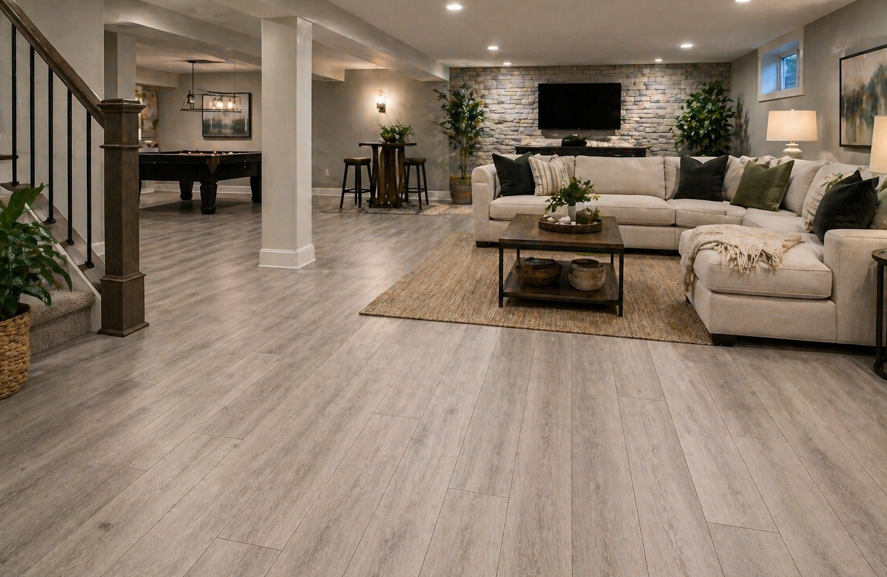
Why Finished Basements in Ohio Need the Right Flooring
Finished basements have come a long way from being simple storage areas. Across Warren County and Clearcreek Township, homeowners are transforming these spaces into comfortable family rooms, home gyms, offices, and even guest suites. It’s extra square footage—and when done right, it adds real value and everyday enjoyment.
But basements aren’t like the rest of your home.
They deal with conditions that make flooring decisions more important. Think about snow melting off boots in winter, humidity creeping in during summer, and cooler temperatures year-round. All of that affects how flooring performs over time.
That’s why choosing the right material isn’t just about looks—it’s about durability, comfort, and long-term reliability.
At Floorco Flooring, homeowners often ask what works best in a finished basement. The answer usually comes down to finding a balance between performance and style. Laminate flooring has become a popular option because it delivers that balance when installed properly.
With the right setup, it can transform a basement into a space that feels just as inviting as any room upstairs.
Is Laminate Flooring a Good Choice for Basements?
This is one of the most common questions homeowners ask—and the answer is yes, with the right preparation.
Modern laminate flooring has improved significantly over the years. It’s designed to handle more than just everyday foot traffic. Today’s options offer:
Better resistance to moisture compared to older versions
Strong protective layers that guard against wear
Realistic wood and stone visuals that elevate the space
That said, it’s important to understand what laminate can and can’t do.
It’s not completely waterproof unless specifically designed that way. But it does perform well in basements when moisture is managed correctly and installation is done properly.
Compared to other flooring types:
Carpet can trap moisture and feel damp
Hardwood is more sensitive to humidity and temperature changes
Laminate sits right in the middle. It offers durability, visual appeal, and practical performance—making it a smart choice for many Ohio basements.
Key Basement Challenges Laminate Needs to Handle
Before installing any flooring, it helps to understand what your basement is dealing with.
Moisture and Dampness
Basements naturally hold more moisture than other parts of the home. Even if there’s no visible water, humidity can still affect materials over time.
Without proper preparation, this can lead to:
Warping or swelling
Musty odors
Reduced lifespan of the flooring
Temperature Fluctuations
Ohio’s climate brings seasonal changes that impact your home’s structure. Basements may feel stable, but temperature shifts still affect subfloors and materials.
Subfloor Conditions
Most basements in the Dayton area have concrete subfloors. These can be uneven, slightly damp, or cooler than other surfaces.
Why this matters:
Flooring needs to adapt to these conditions
Proper installation becomes critical
The right materials help prevent long-term issues
Laminate can handle these challenges—but only when paired with the right preparation and installation approach.
Features to Look for in Basement-Friendly Laminate Flooring
Not all laminate flooring is the same. For basements, certain features make a noticeable difference.
Water-Resistant or Waterproof Core
This is one of the most important factors. It helps protect against moisture that can build up over time.
Durable Wear Layer
A strong surface layer protects against scratches, furniture movement, and everyday use.
Click-Lock Installation System
This type of system creates tight seams and simplifies installation, helping improve overall performance.
Thickness and Stability
Thicker planks often feel more comfortable underfoot and provide better long-term durability.
Quick checklist for choosing the right laminate:
Moisture-resistant design
Strong wear layer
Reliable locking system
Solid overall construction
Focusing on these features helps ensure your basement flooring performs well for years.
The Role of Underlayment in Basement Installations
Underlayment might not be visible, but it plays a huge role in how your flooring performs.
It acts as a layer between the laminate and the subfloor, providing several key benefits:
Helps block moisture coming from the concrete
Adds cushioning for a more comfortable feel
Reduces sound, especially in larger basement spaces
In basements, moisture protection is the biggest advantage. Without it, even high-quality laminate can struggle over time.
Choosing the right underlayment—and installing it correctly—can make the difference between a floor that lasts and one that needs early replacement.
Installation Tips for Long-Lasting Basement Floors
A good installation sets the foundation for everything else.
Taking the time to prepare properly helps avoid issues down the line.
Installation best practices homeowners should know:
Ensure the subfloor is clean, level, and dry
Test for moisture before installation begins
Allow laminate planks to acclimate to the space
Leave expansion gaps around the edges
These steps might seem simple, but they’re essential for long-term performance.
Professional installation also adds peace of mind. It ensures everything is done correctly from the start, so you don’t have to worry later.
Maintenance Tips for Laminate Flooring in Basements
One of the biggest advantages of laminate flooring is how easy it is to maintain.
In basements, a few simple habits help keep it looking great.
Simple habits that protect your basement flooring:
Sweep or vacuum regularly to remove dust and debris
Clean up spills promptly
Use a damp mop with appropriate cleaning products
Keep humidity levels balanced
Because laminate doesn’t trap dirt like carpet, it’s easier to keep clean and fresh. That makes it a great option for spaces that see frequent use.
Common Mistakes to Avoid When Installing Laminate in Basements
Even a good product can underperform if key steps are skipped.
Common mistakes include:
Ignoring moisture conditions
What goes wrong: Flooring may warp or develop issues over time
What to do instead: Always check and manage moisture before installation
Skipping underlayment
What goes wrong: Reduced comfort and poor moisture protection
What to do instead: Use a proper underlayment designed for basements
Choosing the wrong laminate type
What goes wrong: Flooring may not handle basement conditions well
What to do instead: Look for moisture-resistant options
Improper installation
What goes wrong: Gaps, movement, or uneven surfaces
What to do instead: Follow proper installation methods or hire professionals
Avoiding these mistakes helps protect your investment and ensures better results.
How Laminate Flooring Transforms Finished Basements
A well-designed basement can feel like a natural extension of your home—and flooring plays a big role in that transformation.
Laminate flooring offers:
A warmer, more inviting appearance
A wide range of styles to match your design
Comfortable surfaces for everyday use
Whether you’re creating a family lounge or a home office, the right flooring helps tie everything together.
For homeowners exploring laminate flooring options, seeing how these materials work in real spaces can make the decision much easier.
Creating a Comfortable, Durable Basement Space
Finished basements are an opportunity to expand how you use your home. With the right flooring, they can feel just as comfortable and functional as any room upstairs.
The key is making informed choices—understanding moisture, selecting the right materials, and ensuring proper installation.
Floorco Flooring continues to help homeowners across the Dayton area create spaces that are both practical and beautifully designed. With years of experience and a focus on customer care, every project is approached with attention to detail.
If you’re planning a basement upgrade and want guidance on the best flooring options for your space, you can always reach out to us for expert support.


