

Why Refinishing Can Bring Hardwood Floors Back to Life
Hardwood floors have a way of giving a home warmth, character, and long-term value. They can make a living room feel more polished, a dining room feel more welcoming, and a hallway feel connected to the rest of the home. But over time, even beautiful hardwood starts to show signs of daily life.
In Dayton homes, that wear can come from pets, kids, furniture movement, shoes, winter grit, summer humidity, dry indoor heat, and years of regular foot traffic. Scratches, dull spots, fading, worn finish, and colour changes are all common. The good news is that many hardwood floors do not need to be replaced when they start looking tired. They may simply need to be refinished.
Refinishing is the process of sanding down the worn surface of a hardwood floor, repairing small imperfections where needed, applying a new stain if desired, and sealing the floor with a protective finish. When done properly, it can make older hardwood look fresh, clean, and beautiful again.
For homeowners in Dayton and surrounding communities, Floorco Flooring offers knowledgeable flooring guidance, quality products, and practical support for choosing the right approach to hardwood floor care. A refinishing project is not only about improving appearance. It is also about protecting the floor so it can continue adding beauty and function to the home.
If your hardwood floors look scratched, faded, uneven, or dull, refinishing may be the upgrade that helps your home feel renewed without changing the character you already love.
What Hardwood Floor Refinishing Actually Includes
Hardwood floor refinishing is more than adding a new coat of shine. A true refinishing project restores the surface of the wood and gives it a new protective layer.
The process usually begins with an inspection. A flooring professional looks at the condition of the boards, the depth of scratches, the type of hardwood, the current finish, and whether the floor has enough wood thickness to be sanded safely. This step matters because not every floor is a good candidate for full sanding.
After inspection, the room is prepared. Furniture is removed, baseboards or trim may be protected, and the work area is set up to help manage dust and disruption. Refinishing is a detailed process, so preparation helps create a cleaner and smoother result.
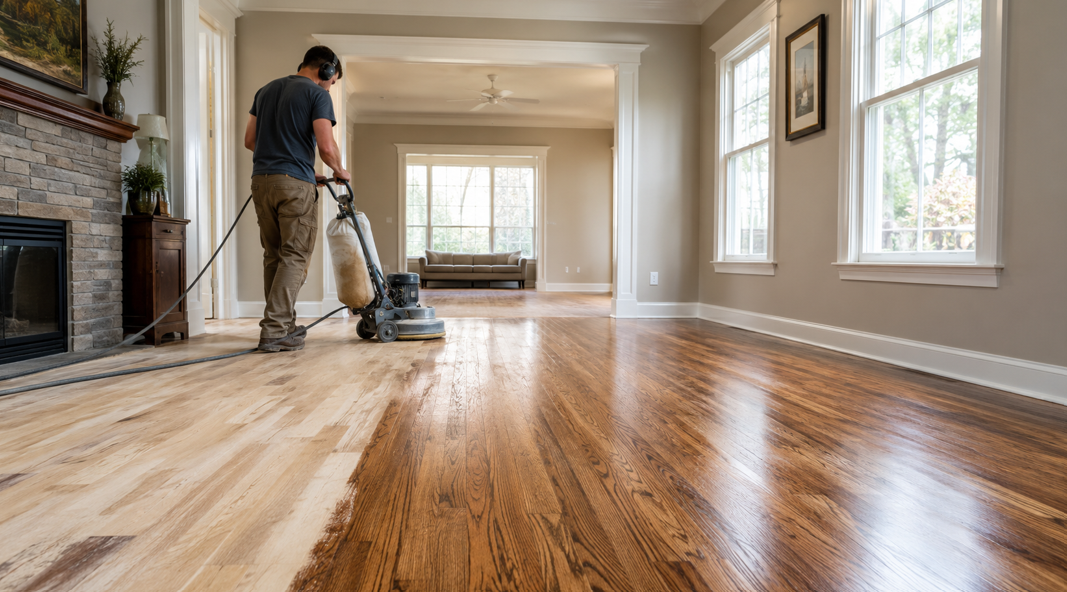
Next comes sanding. Sanding removes the worn finish, surface scratches, and minor unevenness. It brings the wood back to a raw surface so it can accept stain and finish properly. Multiple sanding passes may be used, starting with a stronger grit and moving toward a smoother finish.
Once sanding is complete, repairs or filler may be used for small gaps, nail holes, or minor imperfections. Then the homeowner can choose to keep the natural wood tone or apply a stain for a different colour.
The final stage is finishing. The finish protects the wood from wear, moisture exposure, scuffs, and daily use. It also affects the floor’s appearance, from matte and natural to satin or glossier styles.
In simple terms, refinishing gives hardwood floors a fresh surface, a new look, and renewed protection.
Signs Your Hardwood Floors May Need Refinishing
Hardwood floors do not need refinishing every time they show a small scratch. Minor marks are part of living with real wood. But there are clear signs that a floor may be ready for professional attention.
The Finish Looks Dull or Worn
If your hardwood floor no longer reflects light evenly or looks flat and tired even after cleaning, the finish may be wearing down. This is common in high-traffic areas such as hallways, kitchens, dining rooms, and living rooms.
A dull finish does not always mean the wood itself is damaged. It may simply mean the protective layer has lost its strength and needs to be renewed.
Scratches Are Spread Across the Room
A few light scratches are normal. But when scratches cover large areas or make the floor look aged, refinishing may help restore a smoother appearance. Pet nails, furniture movement, toys, and grit from shoes can all contribute to surface scratches.
Colour Has Faded or Changed
Sunlight can fade hardwood over time, especially near windows, patio doors, and open living spaces. Area rugs can also create uneven colour because covered areas stay darker while exposed areas fade.
Refinishing can help even out colour and give homeowners the option to choose a fresh stain.
Grey or Dark Spots Are Appearing
Grey or dark areas can mean the finish has worn away and moisture has reached the wood. This is more serious than surface dullness. If ignored, these areas can worsen.
A flooring professional can help determine whether refinishing will solve the issue or whether some boards need repair.
Cleaning No Longer Helps
If the floor looks tired no matter how often it is cleaned, the issue may be the finish rather than dirt. At that point, refinishing can make a bigger difference than more cleaning products.
Refinishing vs Replacing Hardwood Floors
One of the most common questions Dayton homeowners ask is whether they should refinish or replace their hardwood floors. The right answer depends on the condition of the floor, the type of wood, the budget, and the design goal.
Refinishing is often the better option when the hardwood is structurally sound but the surface looks worn. If the boards are stable, not severely damaged, and thick enough to sand, refinishing can restore beauty while preserving the original flooring.
Replacement may be the better choice when the floor has major water damage, deep structural problems, severe warping, large broken areas, or too little wood left for sanding. Some engineered hardwood products can be refinished only a limited number of times, depending on the thickness of the top wear layer.
Refinishing can be a smart choice when:
The floor has surface scratches.
The finish is dull or worn.
The colour feels outdated.
The boards are mostly stable.
You want to keep the original character of the home.
Replacement may make more sense when:
Boards are badly cupped, warped, or cracked.
There is widespread water damage.
The floor has been sanded too many times.
The homeowner wants a completely different wood species or plank width.
There are major subfloor issues.
For older Dayton homes, refinishing can be especially appealing because it preserves original charm. Many homes have hardwood with character that is hard to duplicate with new materials. When the floor can be saved, refinishing often gives homeowners the best mix of beauty, value, and respect for the home’s style.
What to Expect Before the Refinishing Project Starts
Before refinishing begins, homeowners need to prepare the space. A little planning can make the project feel smoother from start to finish.
The first step is clearing the room. Furniture, rugs, decor, lamps, and small items need to be moved out of the work area. If multiple rooms are being refinished, the homeowner may need to plan where furniture will go temporarily.
Next, think about daily access. Refinishing can make certain rooms unavailable for several days, depending on the size of the project, the stain choice, the finish type, and drying times. If the project involves main living areas, kitchens, hallways, or stairs, families may need to plan alternate routes through the home.
Pets also need a plan. Dogs and cats should be kept away from the work area during sanding, staining, and finishing. This protects both the floor and the pets. It also helps keep dust, hair, and paw prints away from the fresh finish.
Homeowners should also talk through stain colour and finish sheen before the work begins. Choosing these details early prevents last-minute decisions. It helps to view samples in the home’s natural lighting because stain colours can look different depending on daylight, wall colour, and nearby furniture.
In Dayton homes, seasonal conditions may also affect planning. Summer can be a good time for refinishing because ventilation is often easier, but humidity still needs to be managed. Indoor conditions can influence drying and curing, so professional guidance is important.
Good preparation helps homeowners feel more confident before the first sanding machine enters the room.
What Happens During Sanding
Sanding is one of the most important parts of hardwood floor refinishing. It removes the old finish and prepares the wood for stain and protection.
A professional refinishing team usually uses sanding equipment designed for different parts of the room. Large machines are used across open floor areas, while smaller tools are used near edges, corners, closets, and tight spaces. The goal is to create a smooth, even surface across the entire floor.
Sanding normally happens in stages. The first pass removes the existing finish and heavier surface marks. Later passes use finer sanding to smooth the wood and prepare it for stain or finish. This step requires experience because uneven sanding can create visible marks, waves, or colour problems after staining.
Dust control is another important part of the process. Modern equipment can reduce dust compared with older methods, but homeowners should still expect some dust. Covering nearby belongings, closing off rooms, and following preparation instructions can help.
Some floors may need extra attention during sanding. Older hardwood in Dayton homes may have uneven boards, previous finish buildup, or areas that have been patched over the years. A knowledgeable refinishing team can work through these details and recommend the best approach.
After sanding, the floor will look lighter, raw, and unfinished. This is normal. It may even look less dramatic before stain and finish are applied. The real transformation happens once the wood is cleaned, stained if desired, and sealed.
Sanding sets the foundation for the entire project. When it is done well, the final floor looks smoother, cleaner, and more professionally finished.
Choosing a Stain Colour for Dayton Homes
Stain colour can completely change the mood of a hardwood floor. Some homeowners want to restore the floor’s original tone. Others want a more modern colour that better matches updated cabinets, furniture, or wall colours.
Natural and light stains are popular for homeowners who want a brighter, more open feel. These colours can work especially well in smaller rooms, homes with limited natural light, or modern remodels. Light wood tones can make a space feel fresh without losing warmth.
Medium brown stains are timeless and practical. They work with many Dayton home styles, from traditional to transitional. Medium tones can hide everyday dust and small marks better than very dark floors, which makes them a smart choice for busy families.
Dark stains can look rich and elegant, especially in formal dining rooms, living rooms, and homes with strong natural light. However, darker floors can show dust, pet hair, and scratches more easily. They can still be beautiful, but homeowners should understand the maintenance expectations.
Grey and cooler-toned stains have been popular in recent years, but they need to be chosen carefully. Some cooler tones may not work well with warm cabinets, older trim, or traditional furniture. Viewing samples in the home is important before committing.
The species of wood also affects stain results. Oak, maple, hickory, and other woods absorb stain differently. A stain that looks one way on a sample may look slightly different on your actual floor.
For homeowners comparing hardwood flooring options, stain and finish choices are part of creating a floor that fits both the home’s style and the household’s daily routine.
Picking the Right Finish Sheen
After stain comes the protective finish. The finish helps guard the wood against everyday wear while also affecting how the floor looks.
Matte Finish
Matte finishes are popular because they create a natural, low-shine look. They can make hardwood feel more modern and relaxed. Matte finishes also tend to hide small dust particles, footprints, and minor marks better than shinier finishes.
This can be a good choice for busy Dayton households with pets, kids, or frequent foot traffic.
Satin Finish
Satin is one of the most versatile finish choices. It offers a soft glow without looking too shiny. Many homeowners choose satin because it balances beauty and practicality.
It works well in living rooms, bedrooms, dining rooms, and hallways. It can also complement both traditional and updated home styles.
Semi-Gloss Finish
Semi-gloss has more shine and can make a floor look polished and formal. It can be attractive in certain spaces, but it may show scratches, dust, and footprints more clearly.
Homeowners who prefer a very clean and reflective look may like semi-gloss, but they should be ready for more visible maintenance.
Water-Based vs Oil-Based Finish
Water-based finishes tend to dry faster and usually keep the wood colour clearer. Oil-based finishes can add warmth and depth but may take longer to dry and cure.
Both can be good options depending on the project. The right choice depends on the look you want, the timeline, and the floor’s condition.
How Long Hardwood Floor Refinishing Takes
The timeline for hardwood floor refinishing depends on the size of the area, the condition of the floor, the number of rooms, the stain choice, and the finish system. Most refinishing projects take several days, but larger or more detailed projects may take longer.
A simple project may include sanding, cleaning, staining, and applying finish over a few days. If the floor needs repairs, extra drying time, or multiple finish coats, the timeline can extend.
Drying and curing are not the same thing. A floor may be dry enough to walk on lightly before it is fully cured. Full curing can take longer, depending on the finish type and indoor conditions. During this time, homeowners need to follow care instructions carefully.
Common timeline expectations may include:
Furniture removed before work begins.
Sanding and preparation completed first.
Stain applied if the homeowner wants a colour change.
Finish coats applied after stain.
Light foot traffic allowed only when recommended.
Furniture returned after the appropriate waiting period.
Rugs added later, after the finish has had more time to cure.
Homeowners should avoid rushing this process. Moving furniture back too early or placing rugs too soon can affect the finish. Patience helps protect the final result.
In summer, humidity can influence drying times. Dayton’s July weather can be warm and humid, so indoor climate control may be important. Air conditioning and proper ventilation can help create better conditions, depending on the finish being used.
A clear timeline before the project starts helps families plan around daily routines.
How to Care for Newly Refinished Hardwood Floors
Once hardwood floors are refinished, the first few days and weeks are important. The finish needs time to settle, harden, and reach its full strength.
Homeowners should follow the professional care instructions they receive after the project. These may include when to walk on the floor, when to replace furniture, and when to add rugs.
A few general habits can help protect newly refinished floors:
Avoid shoes on the floor during the early curing period.
Keep pets away until the floor is ready.
Use felt pads under furniture legs.
Lift furniture instead of dragging it.
Avoid wet mopping.
Clean with approved hardwood floor products.
Wait before placing area rugs back down.
Use entry mats to reduce grit from shoes.
Daily care should be simple. Sweep or dust mop regularly to remove grit and debris. Vacuum with a hardwood-safe attachment when needed. Clean spills promptly using the recommended method.
Furniture pads are especially important. Chairs, stools, tables, and couches can scratch a new finish if they are dragged across the floor. Felt pads are a small detail that can protect a big investment.
In Dayton homes, seasonal maintenance also matters. Winter grit and salt can be rough on floors, while summer humidity can affect wood movement. Keeping indoor conditions steady where possible can help hardwood perform better through the seasons.
A refinished floor should look beautiful, but it still needs thoughtful care. With the right habits, homeowners can enjoy that refreshed look for years.
Common Refinishing Mistakes Homeowners Should Avoid
Hardwood refinishing can make a home look dramatically better, but mistakes can affect the final result. Knowing what to avoid helps homeowners make smarter decisions.
One common mistake is waiting too long. If the finish wears away completely and the wood becomes damaged, refinishing may become more involved. Deep stains, grey patches, and water damage can be harder to correct than surface wear.
Another mistake is choosing a stain colour too quickly. Stain should be viewed in the home’s lighting whenever possible. Wall colours, cabinets, trim, and natural light all influence how the final colour will appear.
Some homeowners also underestimate drying and curing time. Walking on the floor too early, moving furniture back too soon, or placing rugs before the finish is ready can cause marks or uneven results.
Using the wrong cleaning products after refinishing is another issue. Harsh cleaners, steam mops, oil soaps, and too much water can damage the finish. Homeowners should stick with approved hardwood cleaning methods.
DIY sanding can also be risky. Sanding equipment is powerful, and mistakes can create uneven areas, swirl marks, or permanent damage. While some homeowners are comfortable with DIY projects, refinishing requires skill and patience.
It is also important not to ignore subfloor or board issues. Refinishing improves the surface, but it does not fix major structural problems. Loose boards, severe cupping, or damaged planks may need repair before the finish work begins.
Avoiding these mistakes helps protect the floor, the timeline, and the final appearance.
When Refinishing May Not Be the Right Option
Refinishing is a great solution for many hardwood floors, but it is not always the best answer. Sometimes replacement or repair may be more practical.
If a floor has severe water damage, sanding may not be enough. Boards that are badly warped, cupped, buckled, or stained through the wood may need to be replaced. Water damage near kitchens, bathrooms, doors, or pet areas should be inspected carefully.
If the hardwood has already been sanded several times, there may not be enough wood left for another full refinishing. This is especially important with older floors. Sanding too deeply can weaken the boards or expose nails.
Some engineered hardwood floors can be refinished, but only if the top hardwood layer is thick enough. Thin wear layers may not be suitable for sanding. A flooring professional can help determine what is safe.
Replacement may also make sense if the homeowner wants a major design change. For example, if you want wider planks, a different species, or a new layout, refinishing the existing floor may not achieve that goal.
In some cases, a screen and recoat may be enough instead of full refinishing. This process lightly abrades the surface and adds a new coat of finish without sanding down to raw wood. It can be useful when the finish is worn but the wood itself is still in good shape.
The best path depends on the floor’s condition, the homeowner’s goals, and the long-term value of the project.
Why Professional Guidance Matters in Dayton Homes
Dayton homes come in many ages, layouts, and styles. Some have original hardwood with historic character. Others have hardwood added during a remodel. Some floors have been refinished before, while others still have their original finish.
That variety makes professional guidance valuable. A floor that looks simple on the surface may have details that affect the refinishing plan. Wood species, board thickness, previous finish type, stains, repairs, and subfloor condition can all influence the best approach.
Local climate also matters. Ohio’s humid summers and dry winters can affect hardwood movement, drying times, and long-term performance. A refinishing plan should account for those conditions, especially in homes with large windows, older HVAC systems, or rooms that experience temperature swings.
Working with experienced flooring professionals also helps homeowners choose the right stain and finish. Instead of guessing from online photos, homeowners can compare real samples and talk through practical needs such as pets, children, furniture movement, sunlight, and cleaning habits.
Professional refinishing can also help protect the value of the home. Hardwood is a long-term investment, and refinishing is one way to preserve that investment. A well-refinished floor can make a home feel cleaner, brighter, and more cared for.
For Dayton homeowners, the best results come from combining product knowledge, installation experience, and an understanding of how local homes are actually lived in.
Bring New Life to Your Hardwood Floors
Refinishing hardwood floors can transform the look and feel of a Dayton home. It can remove years of surface wear, refresh the colour, improve the finish, and bring back the warmth that made the floor special in the first place.
The process takes planning. Homeowners need to understand what sanding includes, how stain and finish choices affect the final look, how long drying and curing can take, and what care is needed afterward. But when the project is handled properly, the result can be well worth it.
Refinishing is especially valuable when the floor still has strong bones. If the boards are stable and thick enough to sand, a professional refinishing project can often restore beauty without replacing the floor. That can preserve the home’s character while giving the space a fresh, updated feel.
For many homes in Dayton, July can be a practical time to plan refinishing because summer remodel projects are already underway. Just remember that humidity, ventilation, and indoor climate control all matter during the process.
If your hardwood floors are scratched, faded, dull, or no longer responding to regular cleaning, it may be time to explore your options. For friendly, practical guidance on refinishing hardwood floors in your Dayton home, get in touch with the Floorco Flooring team.


