

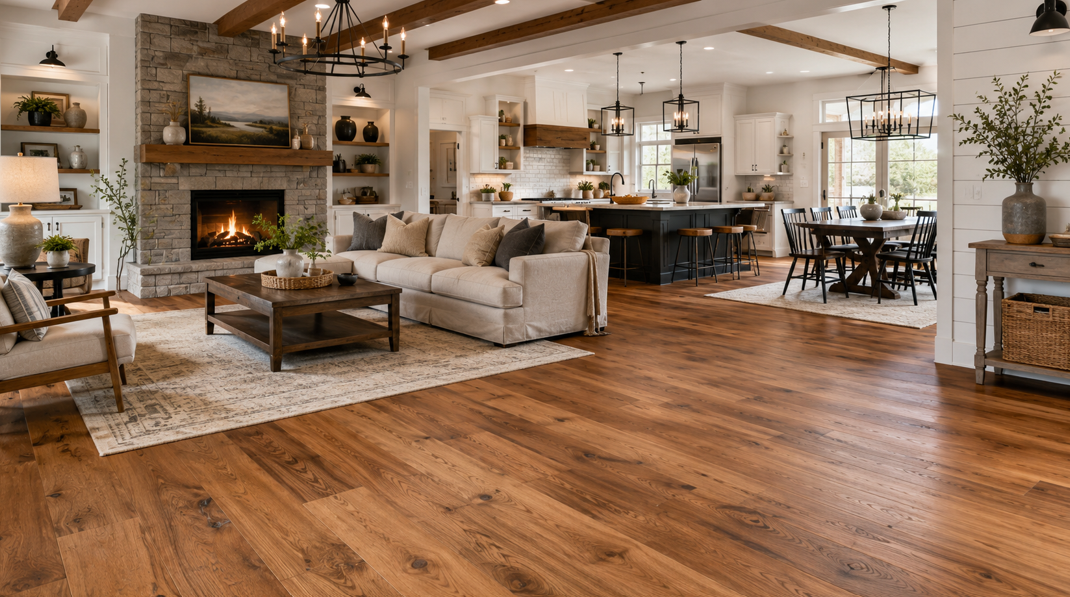
Why Hardwood Works So Well With Modern Farmhouse Interiors
Modern farmhouse design blends the warmth of traditional country homes with the clean lines and lighter finishes found in contemporary interiors. It feels welcoming without looking overly rustic, which makes it a natural fit for many homes throughout Butler County and Warren County.
Hardwood flooring supports that balance beautifully. Its natural grain, subtle color variation, and lasting character create a warm foundation for open layouts, neutral walls, painted cabinetry, exposed beams, and simple furniture.
The key is choosing a floor that looks authentic without making the room feel too heavy. A highly distressed brown floor may push the design toward a traditional farmhouse look, while an extremely smooth gray floor can feel disconnected from the style’s natural roots. Modern farmhouse flooring usually works best somewhere in between.
Homeowners can visit Floorco Flooring to compare hardwood colors, plank sizes, textures, and finishes with guidance from a knowledgeable local team. Seeing full samples in person makes it easier to understand how each option will work with the lighting, cabinetry, and architectural details in a particular home.
The most successful modern farmhouse interiors usually have a few qualities in common:
Natural-looking materials
Warm or balanced neutral colors
Simple, uncluttered surfaces
A mix of traditional and modern details
Comfortable rooms designed for everyday living
Materials that become more attractive with character
Hardwood fits naturally into this approach because it brings visual warmth without requiring busy patterns or excessive decoration. It can serve as a quiet background or become one of the room’s most memorable design features.
Understanding the Modern Farmhouse Look
Modern farmhouse style is often described as comfortable, practical, and clean. It takes familiar farmhouse elements and presents them in a more refined way.
Traditional farmhouse interiors may feature deep brown woods, heavy distressing, antique furniture, and strongly rustic details. Modern farmhouse interiors typically use lighter colors, simpler shapes, and a more selective approach to texture.
Common design elements include:
White, cream, greige, or soft beige walls
Black metal lighting or hardware
Shaker-style cabinets
Open shelving
Large kitchen islands
Natural wood accents
Linen, cotton, leather, and woven textiles
Simple trim and molding
Large windows and bright interiors
A limited, coordinated color palette
The flooring needs to connect these features without competing with them. Hardwood provides natural movement through the grain, but the overall appearance can remain calm when the color and finish are chosen carefully.
Modern Farmhouse Is Not One Fixed Style
Some homeowners prefer a brighter, Scandinavian-inspired farmhouse look with pale oak and minimal contrast. Others want a warmer interior with medium brown floors, dark hardware, and traditional wood furniture.
There are also transitional versions of the style that combine farmhouse details with more formal finishes. A home may include white kitchen cabinets and black fixtures while using tailored furniture, polished lighting, and carefully coordinated decor.
The right hardwood depends on which interpretation feels most natural for the property and the homeowner’s taste.
Local Architecture Matters
Butler County and Warren County include a wide variety of properties, from established homes and rural residences to newer suburban developments.
A wide-plank white oak floor may look perfectly suited to a newly built open-concept home in Mason or Liberty Township. A warmer medium-tone hardwood might better complement an established home in Lebanon, Franklin, or Hamilton.
The goal is not to force the home into a trend. Flooring should support the building’s scale, natural light, existing woodwork, and everyday use.
The Best Hardwood Colors for Modern Farmhouse Homes
Floor color has a major influence on how a modern farmhouse room feels. It affects brightness, contrast, warmth, and the way adjoining finishes appear.
Light Natural Wood Tones
Light natural floors are one of the most versatile choices for modern farmhouse design. Shades inspired by unfinished oak, sand, wheat, and pale honey create a bright, relaxed foundation.
They work especially well with:
White or cream cabinets
Black hardware
Natural stone
Soft greige walls
Light upholstery
Simple wood furniture
Open-concept layouts
Lighter hardwood can also make compact rooms feel more open. It reflects more available light than a deep brown floor and creates less contrast between individual planks.
A pale floor does not need to look washed out. Visible grain, knots, and natural color variation can keep it warm and inviting.
Warm Medium Browns
Medium brown hardwood offers more contrast while maintaining the welcoming quality associated with farmhouse interiors.
Look for shades inspired by caramel, chestnut, warm oak, or light walnut. These colors can complement leather furniture, wood beams, antique pieces, and cream-colored walls without making the room feel overly traditional.
Medium tones are also practical for active households because they can be more forgiving of everyday dust, small marks, and tracked-in debris than extremely light or dark floors.
Soft Greige and Taupe Finishes
Greige flooring combines gray and beige undertones. It can work well in a modern farmhouse home when it retains enough warmth to coordinate with natural wood and soft neutral furnishings.
A balanced greige floor may suit homes with:
Cool white walls
Matte black fixtures
Blue-gray cabinets
Brushed metal accents
Contemporary furniture
Natural linen textiles
Avoid floors that appear strongly blue or cold gray unless the rest of the interior has a similar undertone. Modern farmhouse rooms generally feel more welcoming when the flooring includes a natural brown, beige, or taupe influence.
Dark Hardwood
Dark floors can create a dramatic modern farmhouse look, particularly in large rooms with abundant natural light.
Espresso, deep walnut, and rich brown finishes can provide strong contrast against white walls and cabinetry. However, they may show dust, scratches, and pet hair more readily.
They can also make a small or dim room feel more enclosed. Before choosing a dark floor, view a large sample in the home during both daylight and evening hours.
Hardwood Species That Suit Modern Farmhouse Design
The species affects the floor’s grain, color variation, hardness, and overall personality.
White Oak
White oak is a popular fit for modern farmhouse interiors because its grain is visible without feeling overly busy. Its natural color ranges from beige and tan to soft brown, allowing it to work with light, medium, and muted finishes.
It pairs particularly well with wide planks and low-sheen finishes. Depending on the cut and grading, white oak can appear clean and refined or naturally rustic.
Red Oak
Red oak has a more pronounced grain and warmer undertones. It can create a classic farmhouse feel while still working in a modern interior when paired with an updated stain.
Natural red oak may show pink, amber, or reddish notes. Neutral stains can soften those tones, while warm finishes can highlight them.
It is a useful choice for homeowners who want visible wood character and a familiar, welcoming appearance.
Hickory
Hickory offers strong grain patterns and noticeable color variation. Individual boards may range from light cream to rich brown, creating a lively and distinctly natural floor.
This species works well when the homeowner wants the hardwood to become a major design feature. It may feel too active in a room that already includes strong cabinet grain, patterned countertops, and several competing textures.
A carefully planned room can use hickory as the main source of visual movement while keeping walls and furnishings simple.
Maple
Maple has a smoother, more understated grain than oak or hickory. It can support a cleaner interpretation of modern farmhouse style, especially in homes with contemporary furniture and minimal rustic detailing.
Its natural appearance is typically light and refined. Maple can be sensitive to how it accepts stain, so homeowners should view the exact finished product rather than selecting it based only on a small color sample.
Walnut
Walnut provides rich brown color and elegant grain. It can bring warmth and sophistication to a farmhouse-inspired interior without relying on heavy distressing.
Because walnut is generally softer than some other common hardwood species, lifestyle and room use need consideration. It may suit bedrooms, offices, formal living spaces, or households comfortable with natural wear becoming part of the floor’s character.
Choosing Between Solid and Engineered Hardwood
Both solid and engineered hardwood can support modern farmhouse design. The right construction depends on the installation area, subfloor, moisture conditions, and project requirements.
Solid hardwood is made from one piece of wood. Depending on the product, it may offer future refinishing potential and the substantial feel many homeowners associate with traditional wood flooring.
Engineered hardwood has a real hardwood surface over a layered core. Its construction can provide greater dimensional stability in certain environments and may allow installation in areas where solid wood is not the preferred option.
Homeowners can browse available hardwood flooring while comparing species, surface treatments, construction types, and installation requirements.
The decision should consider:
Whether the subfloor is wood or concrete
Whether the room is above, on, or below grade
Indoor humidity conditions
The manufacturer’s approved installation methods
The thickness of the real wood surface
Future refinishing expectations
Transitions to adjoining floors
Radiant-heating compatibility, when relevant
Engineered hardwood should not be confused with laminate. Engineered flooring has a real wood surface, while laminate uses a printed decorative layer designed to recreate the look of wood.
Plank Width and Layout Choices
Plank dimensions can change the entire character of a room.
Wide-Plank Hardwood
Wide planks are strongly associated with modern farmhouse design. They create fewer seams across the floor and allow more of the wood grain to be seen on each board.
A wide-plank floor can make an open living area feel calm, substantial, and connected. It often works beautifully in great rooms, kitchens, dining areas, and long hallways.
However, plank width needs to suit the room’s scale. Extremely wide boards can overwhelm a narrow space or make natural color variation more noticeable.
Standard-Width Planks
Standard-width boards offer a classic appearance that works in both traditional and modern homes. They may be a better fit for smaller rooms, established properties, or homeowners who want a timeless floor rather than a strongly trend-driven look.
They can also create more visual rhythm across a room because there are additional plank lines.
Mixed-Length Boards
Random or mixed board lengths create a natural installation pattern. They can prevent the floor from looking repetitive and contribute to the relaxed character of farmhouse design.
The layout still needs careful planning to avoid obvious stair-step patterns, clustered seams, or too many short boards in one area.
Direction of Installation
Hardwood is often installed parallel to the longest wall or along the primary sightline. Structural requirements may also affect direction, particularly with solid hardwood over a wood subfloor.
In an open layout, consistent direction can help connect the kitchen, dining, and living areas. In a hallway, boards running lengthwise can emphasize the path and make the space feel more continuous.
Surface Texture and Finish
Texture can add character, but restraint is important in a modern farmhouse interior.
Wire-Brushed Finishes
Wire brushing removes some of the softer wood grain and leaves a subtle texture on the surface. It can highlight the natural structure of the wood without creating a heavily distressed appearance.
This finish may also help disguise small marks from everyday use, making it appealing for busy households.
Hand-Scraped Looks
Hand-scraped flooring has more visible texture and variation. It can support a rustic farmhouse look, but deep scraping may feel too traditional in a modern interior.
A lightly scraped surface can provide character without dominating the room.
Smooth Hardwood
Smooth floors offer a cleaner, more tailored appearance. They work well in contemporary farmhouse homes with minimal furniture, simple cabinetry, and refined finishes.
Because smooth surfaces reflect light more evenly, scratches and dents may be more noticeable depending on the sheen and color.
Matte and Low-Sheen Finishes
Matte and satin finishes are often well suited to modern farmhouse design. They allow the grain and color to remain the focus while avoiding the highly polished look associated with more formal interiors.
Lower-sheen finishes may also make everyday dust and light surface marks less noticeable.
Coordinating Hardwood With Farmhouse Cabinets and Walls
A successful flooring choice needs to work with the room’s permanent finishes.
White Cabinets
White cabinetry can coordinate with almost any natural hardwood tone. Light floors create a soft, airy look, while medium or dark floors add stronger contrast.
Pay attention to the cabinet’s undertone. A warm cream cabinet may clash with a very cool gray floor, while a crisp white may make an orange-toned stain appear stronger.
Wood Cabinets
When both the floor and cabinets feature visible wood grain, they do not need to match exactly. In fact, a close but imperfect match can look accidental.
Aim for coordination through undertone and contrast. Dark cabinets can pair with lighter floors, while natural oak cabinets may benefit from a floor that is distinctly lighter, darker, or more neutral.
Painted Green, Blue, or Gray Cabinets
Muted green, navy, blue-gray, and charcoal cabinets can give a farmhouse kitchen a more personalized look.
Warm oak and medium brown floors often balance these colors. Light natural hardwood can keep darker cabinetry from making the room feel too heavy.
Wall Colors
Warm white, cream, beige, greige, and soft gray walls are common in modern farmhouse homes.
Always view flooring samples against the actual wall color. A stain that appears neutral in a showroom may reveal pink, yellow, green, or gray undertones at home.
Room-by-Room Hardwood Planning
Modern farmhouse design often uses consistent flooring across several connected rooms, but each space still has practical requirements.
Kitchens
Hardwood can create a seamless connection between a kitchen and adjacent living areas. It adds warmth to painted cabinets, stone countertops, and metal fixtures.
Spills need prompt attention, and mats near sinks or exterior doors should be breathable and appropriate for the flooring.
The installation plan should also account for islands, appliances, cabinets, and transitions.
Living Rooms and Great Rooms
These spaces give homeowners the opportunity to showcase wide planks, natural grain, and coordinated rugs.
Furniture pads can help protect the finish. Rugs can define seating areas while leaving enough visible flooring to connect the room.
Dining Rooms
Dining chairs create repeated movement across a relatively small area. Durable finishes and quality furniture protection are especially useful.
A medium-tone or lightly textured surface may disguise everyday wear more effectively than a smooth, extremely dark finish.
Bedrooms
Hardwood gives bedrooms a clean, calm foundation. Light oak, maple, and muted medium tones work well with upholstered furniture, natural fabrics, and soft wall colors.
An area rug can provide warmth while preserving the hardwood as a visible design element.
Entryways and Hallways
Entryways experience moisture, grit, and concentrated traffic. Protective mats and regular cleaning help reduce surface wear.
Hallways also reveal installation alignment clearly, making plank direction and seam placement important design considerations.
Practical Considerations for Active Households
A beautiful floor needs to fit everyday life.
Homes with pets may benefit from:
Lighter or medium colors
Visible grain patterns
Matte finishes
Textured surfaces
Regular nail care
Rugs or runners in active areas
Families with children may value stain resistance, durable finishes, easy cleaning, and surfaces that do not show every small mark.
No hardwood is completely scratch-proof. Species hardness can influence dent resistance, but the finish, color, texture, maintenance, and household habits also affect how the floor ages.
A floor with natural grain and variation may make everyday changes feel less noticeable. For some homeowners, small marks become part of the authentic character that makes real wood appealing.
Creating a Cohesive Modern Farmhouse Home
Hardwood should connect the home rather than compete with each room’s furnishings.
Choose a limited material palette and repeat key elements. For example, a warm oak floor might be echoed in open shelves, a dining table, or ceiling beams. Black hardware can then provide contrast without introducing another dominant wood tone.
Avoid matching every wood surface exactly. A room often feels more natural when it includes related tones with clear variation.
A balanced modern farmhouse palette might include:
Light oak flooring
Warm white walls
Soft gray or green cabinetry
Black metal fixtures
Natural stone or quartz
Linen upholstery
Medium brown furniture accents
Another home may use medium brown hardwood, cream cabinetry, white walls, and antique wood furniture for a warmer interpretation.
The flooring can support either direction when its undertone and level of variation are chosen intentionally.
Installation Details That Influence the Finished Look
Product selection is only part of the project. Professional preparation and installation affect the appearance and performance of the floor.
The installer may need to evaluate:
Subfloor flatness
Moisture levels
Structural movement
Existing flooring removal
Board layout
Expansion requirements
Stair details
Door clearances
Transitions
Baseboards and trim
Natural hardwood includes variation. Boards need to be blended from multiple cartons during installation so color and grain changes appear balanced throughout the room.
The first rows also influence alignment across the entire space. Careful planning is particularly important in open-concept homes where the floor remains visible across long distances.
Floorco Flooring’s installation team can assist with removal, preparation, installation, and finishing details, helping homeowners create a polished result that supports the home’s overall design.
Caring for Modern Farmhouse Hardwood
Routine maintenance helps preserve the floor’s beauty without making ownership feel demanding.
Remove grit regularly with a soft broom, dust mop, or suitable vacuum attachment. Small particles can act like abrasive material when walked across repeatedly.
Wipe spills promptly using the cleaning method approved by the flooring manufacturer. Avoid excessive water, steam cleaning, harsh chemicals, waxes, and unapproved homemade solutions.
Additional care habits include:
Using protective pads beneath furniture
Lifting rather than dragging heavy items
Placing suitable mats at exterior doors
Keeping pet nails maintained
Monitoring indoor humidity
Using rugs in concentrated traffic areas
Following product-specific maintenance instructions
Sunlight can change the color of real wood over time. Window coverings may help manage intense exposure, while periodically adjusting rugs can encourage more even aging.
Choosing a Floor That Feels Right for Your Home
The best modern farmhouse hardwood is not simply the floor currently appearing most often in design photos. It is the product that works with the property, lighting, architecture, furnishings, and daily routine.
Before making a decision, ask:
Does the color remain appealing in morning and evening light?
Does the undertone coordinate with cabinets and walls?
Is the grain too quiet or too active for the room?
Does the plank width suit the room’s scale?
Will the finish support the household’s daily activity?
Is solid or engineered construction more appropriate?
What preparation does the subfloor require?
How will the floor transition into adjoining spaces?
What maintenance does the manufacturer recommend?
Does the product include the desired warranty coverage?
Bring cabinet samples, paint colors, countertop pieces, room photographs, and measurements to the showroom when possible. Comparing these materials together can reveal undertone conflicts that may not be obvious when each item is viewed separately.
Ready to find hardwood that brings warmth, character, and modern farmhouse style to your Butler County or Warren County home? Get in touch with the Floorco Flooring team for personalized product and installation guidance.


