

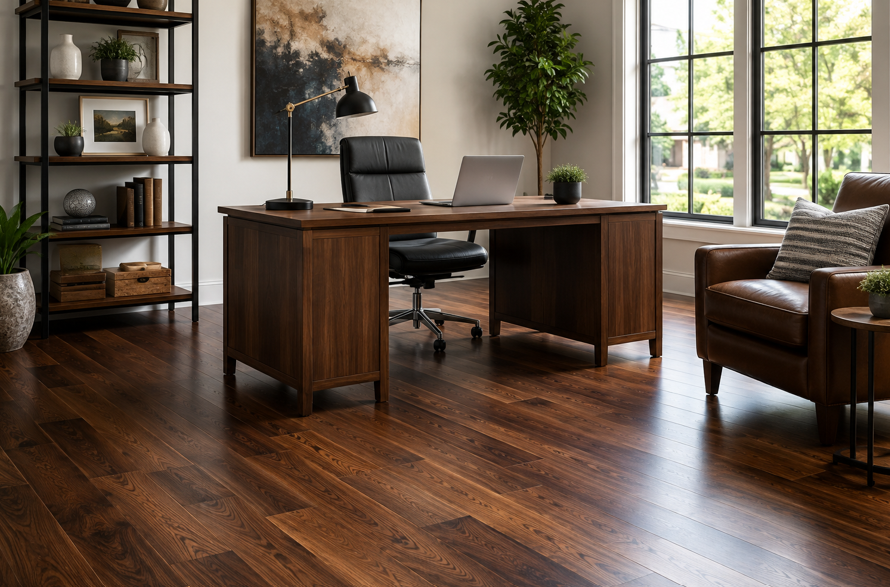
Working from home has changed what people expect from a spare bedroom, den, loft, or dedicated office. A room that once handled occasional paperwork may now support video meetings, focused work, client calls, and eight-hour days at a desk. Flooring plays a bigger role in that setup than many homeowners realize.
A good home-office floor needs to look professional, feel comfortable under everyday use, and hold up around desk chairs, furniture, foot traffic, and changing Ohio seasons. Hardwood can be a strong fit because it brings warmth, natural character, and a polished look that works with everything from traditional studies to modern workspaces.
For homeowners in Centerville, Kettering, Dayton, and surrounding Miami Valley communities, Floorco Flooring offers a broad flooring selection and personalized guidance for matching a product to the room, household, and design goals.
This guide covers the practical details that matter most when choosing hardwood for a home office, including species, color, finish, desk-chair wear, acoustics, lighting, and long-term care.
Why Hardwood Works So Well in a Home Office
A home office needs to support concentration while still fitting naturally with the rest of the house. Hardwood does both. It creates a clean, finished look without making the room feel cold or overly commercial.
It also gives you flexibility when your office changes over time. A room used for solo work today may later become a shared office, study, library, or guest room.
A Natural, Professional Look
Hardwood has visual depth that works well on video calls and in person. Grain patterns, natural color variation, and real wood texture give the room character without requiring a lot of decorative extras.
Depending on the species and stain, hardwood can support:
Traditional executive-style offices
Light, Scandinavian-inspired workspaces
Modern minimalist rooms
Farmhouse and transitional interiors
Craftsman or historic homes
Multi-use offices and guest rooms
The floor can be understated or become one of the room's main design features.
Good for Rolling Chairs and Everyday Movement
Hardwood provides a firm surface under office furniture, which can make chairs and movable pieces easier to position than they would be on deep carpet.
The key is protecting the finish and choosing the right floor for the amount of daily activity the room receives.
Start With How You Actually Use the Office
Before comparing colors or plank widths, think about what happens in the room during a normal week.
A quiet office used a few hours at a time has different needs from a full-time workspace with two desks, a rolling chair, pets, storage cabinets, and regular client visits.
Ask yourself:
How many hours a day is the room used?
Will a rolling chair be used regularly?
Is the office shared?
Are pets often in the room?
Does the room receive strong direct sunlight?
Is the office upstairs, over a basement, or on a concrete slab?
Will heavy bookcases or storage cabinets stay in place?
Do you want the office to match nearby hardwood?
These questions help move the decision beyond appearance. A flooring choice that fits your routine is more likely to look good and perform well for years.
Choosing a Hardwood Species for Daily Office Use
Different hardwood species vary in grain pattern, color, and resistance to dents and wear. For a home office, the best choice is usually one that balances the look you want with the activity level in the room.
Oak for Versatility
Oak is a familiar choice because it works with many design styles and typically offers visible grain that helps disguise minor everyday marks.
White oak often leans toward neutral or slightly warm tones, while red oak can have more pronounced warm or reddish undertones. Oak can work well in both traditional and updated offices.
Maple for a Cleaner Look
Maple typically has a finer, more subtle grain than oak. That can create a smoother, quieter visual effect.
It suits home offices with simple cabinetry, modern desks, neutral walls, and clean architectural lines. Because the grain is less pronounced, surface marks can sometimes be more noticeable depending on the finish and color.
Hickory for Character and Variation
Hickory can bring stronger natural contrast into a room. Its grain and tonal variation create a more expressive floor that works well in rustic, farmhouse, or casual home offices.
If the room already has busy shelving or patterned furniture, consider whether a highly varied floor will complement the space or compete with it.
Walnut for a Richer Style
Walnut can create a refined office with deep, warm color and distinctive grain. It works especially well with dark metal accents, leather furniture, built-in shelving, and warm neutral walls.
When choosing any species, consider both appearance and expected wear rather than selecting by color alone.
Solid or Engineered Hardwood for a Home Office?
Both solid and engineered hardwood can create a beautiful office. The better option depends on the room, subfloor, installation conditions, and specific product.
Solid Hardwood
Solid hardwood boards are made from a single piece of wood. Homeowners often value solid hardwood for its traditional construction and refinishing potential. Depending on the product and condition, many solid wood floors can be refinished over their service life.
Engineered Hardwood
Engineered hardwood uses a real hardwood surface over a layered core. That construction can make engineered flooring suitable for a wider range of installations, depending on the manufacturer's requirements.
When comparing hardwood flooring, look beyond the words "solid" and "engineered." Compare the actual construction, wear layer, finish, approved installation methods, warranty, and care requirements of the products you are considering.
Neither category is automatically right for every office.
How Color Changes the Feel of a Home Office
Floor color affects how large, bright, formal, or relaxed an office feels. The right choice depends on room size, natural light, furniture, wall colors, and the mood you want during the workday.
Light Hardwood for Smaller or Darker Offices
Lighter wood tones can help a compact office feel more open.
Natural oak, pale beige, soft honey, and light neutral finishes work especially well in rooms with limited natural light. They also pair easily with white desks, light cabinetry, black metal frames, and soft gray walls.
Light flooring can be especially useful in smaller offices where a former bedroom has been converted into a workspace.
Medium Tones for Flexibility
Medium-brown and natural wood tones are easy to build around because they sit between very light and very dark design schemes.
They can work with traditional furniture today and more modern pieces later.
Dark Hardwood for a More Formal Look
Deep brown flooring can create a sophisticated, grounded office. It looks particularly strong with built-ins, leather, dark metal, and warm lighting.
Darker floors can show dust, pet hair, and some surface marks more readily than floors with moderate grain and tonal variation, so cleaning preferences deserve consideration.
Think About Your Desk Chair Before Choosing the Floor
Rolling office chairs create repetitive movement in a concentrated area. Over time, that repeated contact can affect almost any finished flooring surface.
A quality chair mat designed for hardwood can reduce repetitive wear. Another option is replacing hard plastic casters with softer wheels specifically designed for hard-surface flooring, provided they are appropriate for your chair and floor.
Even with softer casters, keeping the floor clean matters. Grit caught beneath wheels can act like an abrasive.
Desks, file cabinets, bookcases, and storage pieces can also place concentrated weight on the floor. Use suitable furniture protectors where needed, follow manufacturer guidance, and lift furniture rather than dragging it when rearranging the room.
Choose a Finish That Fits a Working Room
The finish plays a major role in how hardwood looks and how everyday wear appears.
Matte and Low-Sheen Finishes
Lower-sheen finishes can be a practical choice for busy offices because they tend to reflect less light and may make minor surface marks less visually obvious. They also work well with interiors that favor a more natural wood appearance.
Higher-Sheen Finishes
A glossier finish can create a more formal, traditional look and can reflect more light into the room. Dust, footprints, and small surface marks may be more noticeable under certain lighting conditions.
Texture Can Help
Wire-brushed or lightly textured surfaces can add character while making small signs of daily use less visually prominent.
Your preferred appearance and tolerance for visible everyday wear can guide the choice.
Plan for Video Calls and Office Lighting
Flooring may not be the first feature you think about when setting up video calls, but the room's surfaces affect its overall visual balance.
A very dark floor paired with dark furniture and limited daylight can make the office feel heavy. A very pale room with bright flooring and white furniture may need warmer elements to avoid feeling washed out.
Use Contrast Intentionally
A light oak floor can look sharp with a walnut desk or black metal furniture. A darker floor may benefit from a lighter desk, soft wall colors, or a pale area rug.
The goal is not to match every surface. Contrast usually creates a more layered, natural-looking office.
Check Samples at Different Times of Day
View samples near the window, under your desk, beside existing trim, next to the wall color, and under your normal evening lighting.
A hardwood sample that looks warm in afternoon sunlight may look more neutral under lamps, so checking it throughout the day can prevent surprises.
Manage Sound in a Hardwood Home Office
Hardwood creates a firm surface, so sound behaves differently than it does in a carpeted room. That matters when your workday includes calls, online meetings, or recorded presentations.
You do not need to cover a beautiful hardwood floor to improve acoustics. Soft furnishings can help reduce echoes while keeping most of the floor visible.
Consider adding:
An area rug
Fabric window treatments
Upholstered seating
Bookshelves
Wall art
Fabric-covered acoustic panels where appropriate
An area rug beneath or near the desk can add comfort and sound absorption while also helping define the workspace. Make sure any rug backing or pad is compatible with your hardwood finish.
Think About Ohio's Seasonal Indoor Conditions
Hardwood is a natural material, so seasonal changes in indoor humidity can influence dimensional movement.
Ohio homes experience humid summers and dry heating seasons. Keeping indoor conditions reasonably stable and following the flooring manufacturer's environmental recommendations can support long-term performance.
Practical habits include:
Using heating and cooling consistently
Addressing unusually damp areas
Managing excessive indoor dryness where appropriate
Wiping spills promptly
Watching for plumbing or window leaks
Following product-specific care instructions
If the office sits over a basement or has a concrete subfloor, product selection and installation requirements deserve additional attention before installation begins.
How to Coordinate Office Hardwood With the Rest of the Home
A home office does not need to be identical to adjoining rooms, but visual continuity can make the house feel more intentional.
If Hardwood Already Runs Through the Hallway
Matching the existing species, width, color, and finish may create the smoothest transition.
An exact match is not always available, particularly with older floors. In that case, a deliberately complementary floor can look better than a near-match that is slightly off.
If the Office Is Behind a Closed Door
You have more design freedom. A closed office can support a different tone or species, especially if you want the room to feel distinct from the rest of the house.
Use trim, wall color, and furniture to connect it back to the home's overall style.
For Historic or Traditional Homes
Kettering, Dayton, and nearby communities include homes from many architectural periods. In older properties, consider how the floor relates to existing trim, doors, built-ins, and adjoining materials.
A floor that respects those elements can still feel updated without losing the character that makes the home distinctive.
Keep Your Home-Office Hardwood Looking Professional
Once the floor is installed, a simple maintenance routine can help preserve its appearance.
Start With Manufacturer-Approved Care
Cleaning recommendations differ between hardwood products and finishes. Use the methods and products specified for your floor rather than assuming every wood-floor cleaner is interchangeable.
Deal With Spills Promptly
Coffee, water bottles, plant containers, and humidifiers are all common in home offices. Wipe spills quickly and keep an eye on areas under plants or equipment where moisture can sit unnoticed.
Reduce Tracked-In Grit
If your office has direct outdoor access, a good entry mat can help catch debris before it reaches the hardwood. Regular sweeping or vacuuming with a hardwood-appropriate attachment can also reduce abrasive particles.
Move Items Carefully
When rearranging the office, lift furniture where practical. Dragging a desk or loaded cabinet can create scratches that routine foot traffic would never cause.
A versatile hardwood floor also lets you refresh the room later by changing rugs, paint, lighting, shelving, or furniture while keeping the flooring as the foundation.
Build a Home Office That Works as Good as It Looks
A home office needs more than a desk and a reliable internet connection. The room has to support everyday work while still feeling like part of your home.
Hardwood flooring can create that balance. It offers natural warmth, professional style, design flexibility, and a firm surface that works well with office furniture when it is properly protected and maintained.
For a smaller Centerville office, a light oak may help the room feel more open. A traditional Kettering study may suit a richer medium or dark tone. A modern Dayton workspace could pair beautifully with clean-grained maple or neutral engineered hardwood. The best choice depends on how you use the room, the subfloor, lighting, furniture, household activity, and the look you want to live with every day.
Pay attention to species, construction, finish, sheen, chair movement, acoustics, and Ohio's seasonal indoor conditions before making the final decision. Those practical details are what turn an attractive sample into a floor that truly works for your workspace.
Floorco Flooring offers a large showroom selection along with knowledgeable, personalized guidance for homeowners throughout the Dayton area. If you're planning a home-office update in Centerville, Kettering, Dayton, or another nearby community, get in touch to find a hardwood option that suits your workday, your home, and your style.


