

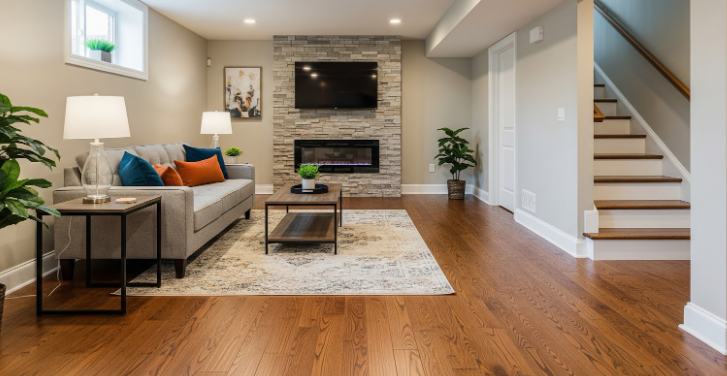
Finished basements are having a moment across Dayton, Centerville, Beavercreek, and nearby neighborhoods. Families are turning these lower levels into media rooms, guest suites, home gyms, offices, and play spaces. It’s valuable square footage that shouldn’t feel like an afterthought.
And once the drywall’s up and the lighting is warm, most homeowners want the space to look just as beautiful as the rest of the house.
That’s when the big question comes up:
Can you install hardwood flooring in a basement?
The short answer is yes — but only if you choose the right type, plan carefully, and understand how Ohio’s climate affects floors below grade.
At Floorco Flooring, we talk through this decision with Dayton-area homeowners every week. With over 30 years of experience and one of the largest flooring showrooms in the region, the team has seen what performs well long-term and what causes headaches later.
This guide breaks it all down in plain English so you can decide if hardwood is the right fit for your finished basement — and how to do it the smart way.
Why So Many Homeowners Want Hardwood Downstairs
There’s a reason hardwood is still one of the most requested flooring styles in basements.
It simply looks incredible.
When the same flooring runs from your main level down into the basement, the home feels:
Larger
More cohesive
More polished
More like “living space” and less like “basement”
Hardwood adds warmth and character that carpet or tile often can’t match. If you’re designing a guest suite, entertainment space, or home office, wood tones create a welcoming, high-end feel.
It also offers practical perks:
Easy cleaning
Fewer allergens than carpet
Long-term value
Timeless design appeal
But here’s the catch: basements behave differently than upstairs rooms. That’s where many homeowners run into trouble.
The Unique Challenges of Basements in Ohio Homes
Dayton basements deal with conditions you don’t see on upper floors.
Even beautifully finished spaces are affected by:
Seasonal humidity swings
Ohio summers bring moisture-heavy air. Winters get dry. That expansion and contraction can stress wood.
Concrete subfloors
Basements sit directly on concrete slabs that can hold or transmit moisture.
Below-grade placement
Being underground naturally increases the chance of dampness.
Temperature changes
Cooler air near the floor can affect wood stability.
These factors don’t mean hardwood is impossible. They simply mean you can’t treat a basement like a typical living room installation.
Planning makes all the difference.
Solid Hardwood vs Engineered Hardwood: What’s the Difference?
This is the most important decision you’ll make.
Solid hardwood
One solid piece of wood
Can expand and contract significantly
More sensitive to moisture
Engineered hardwood
Real hardwood top layer
Stable plywood core
Designed to resist movement
In basements, stability is everything.
Solid hardwood is generally not recommended below grade. It’s more likely to cup, gap, or warp when moisture changes.
Engineered hardwood, on the other hand, is specifically built to handle environments like finished basements.
For most Dayton homes, engineered is the clear winner.
Why Engineered Hardwood Works Better in Basements
If you love the look of wood downstairs, engineered hardwood is usually the safest path forward.
Here’s why.
Layered construction
The cross-layered core reduces movement caused by humidity changes.
Real wood surface
You still get authentic grain, texture, and warmth — not a printed look.
Better moisture resistance
It handles minor moisture fluctuations far better than solid planks.
Installation flexibility
It can often be glued or floated over concrete with proper underlayment.
Long-term durability
When installed correctly, it performs beautifully for years.
If you’re exploring options, you can browse today’s hardwood flooring collections to see engineered styles that look just like traditional solid wood.
Most homeowners are surprised by how realistic and beautiful they are.
How to Check Moisture Before Installing
Moisture testing is non-negotiable.
Even if your basement “feels dry,” the concrete slab can still contain hidden moisture.
Before installation, professionals typically:
Test the slab with moisture meters
Check relative humidity
Evaluate any past water issues
Look for foundation cracks or seepage
Skipping this step can lead to long-term damage.
If moisture levels are too high, solutions may include:
Vapor barriers
Dehumidifiers
Waterproofing improvements
Specialized underlayments
Taking care of this upfront protects your investment and keeps your new floor looking great.
Installation Methods That Work Best Below Grade
The way hardwood is installed matters almost as much as the material itself.
Floating floors
Planks click together and “float” over underlayment. Great for moisture protection and easy repairs.
Glue-down installations
Provides a secure, stable feel and reduces movement.
Nail-down
Typically avoided in basements due to concrete subfloors.
Professional installers evaluate your specific space and recommend the method that offers the best performance.
This isn’t a DIY-friendly project. Precision and preparation are key.
Best Hardwood Colours for Finished Basements
Basements often have less natural light, so color choice plays a huge role.
Lighter tones
Make the space feel bigger and brighter. Great for family rooms or offices.
Medium naturals
Add warmth without darkening the room. Very forgiving for everyday wear.
Warm browns
Create cozy, comfortable spaces for media rooms or guest areas.
Very dark shades
Look dramatic but may make low-light basements feel smaller.
Most Dayton homeowners lean toward light or medium tones to keep the area open and inviting.
Maintenance Tips for Basement Hardwood
Once installed, hardwood in basements is easy to care for with a few smart habits.
Keep humidity steady
Aim for 35–55% year-round using a dehumidifier if needed.
Clean spills quickly
Even engineered wood prefers dry conditions.
Use protective pads
Furniture legs can scratch surfaces over time.
Sweep regularly
Dust and grit can dull the finish.
Avoid wet mopping
Use wood-safe cleaning products instead.
These simple steps help your floor stay beautiful for years.
When Hardwood Might Not Be the Right Choice
Hardwood is stunning — but it’s not always the best match for every basement.
You might consider alternatives if:
Your basement has frequent moisture issues
Flooding has happened before
You want ultra-low maintenance
The space doubles as a workshop or heavy-use area
In those cases, laminate or luxury vinyl might be a better fit.
A knowledgeable flooring team will always talk through options honestly instead of pushing one solution.
Why Professional Guidance Makes a Big Difference
Basement flooring isn’t just about picking a color you like.
It involves:
Moisture testing
Subfloor prep
Correct underlayment
Proper installation techniques
Product selection based on your home
This is where experience matters.
Floorco Flooring has helped Dayton homeowners for decades with both design advice and expert in-house installation. Their non-commissioned team focuses on what truly works best for your space — not just making a sale.
That local expertise gives you confidence the job will be done right the first time.
Creating a Basement That Feels Like Part of Your Home
When you walk downstairs, the space shouldn’t feel like an afterthought.
The right hardwood makes it feel:
Warm
Finished
Comfortable
Inviting
It turns a basement into a real extension of your home — somewhere you actually want to spend time.
With the right material, proper prep, and professional installation, hardwood can absolutely work below grade.
If you’re planning a remodel or exploring options, the team is happy to answer questions and guide you through the process. Simply get in touch to schedule a consultation or stop by the showroom.
A finished basement deserves flooring that looks just as beautiful as the rest of your home.


