

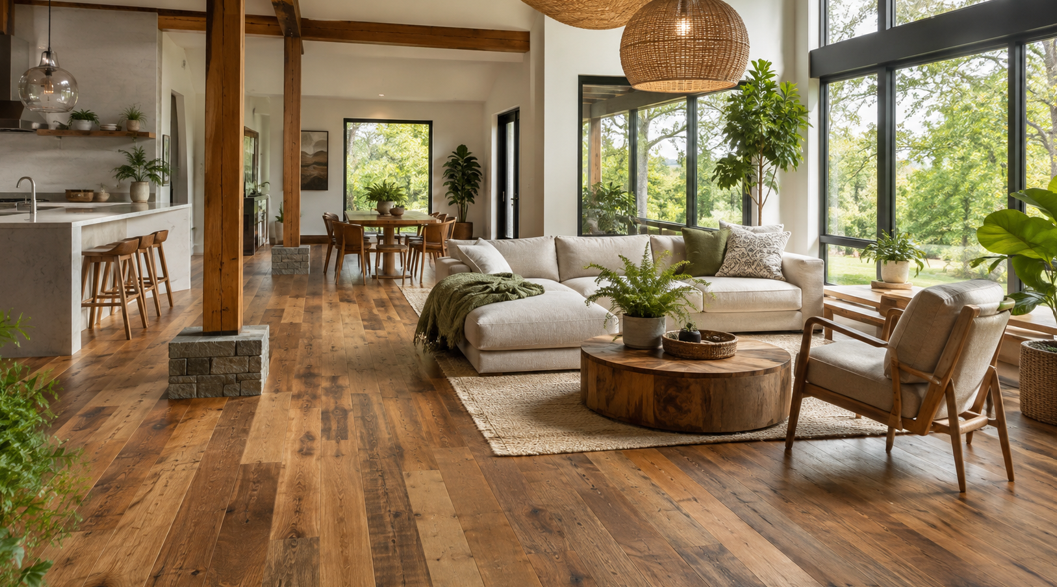
A beautiful hardwood floor can change the entire feel of a home, but appearance isn’t the only factor many Miami Valley homeowners care about anymore. More people are asking where flooring materials come from, how long they will last, what finishes are used, and whether a product supports a more thoughtful approach to home improvement.
Hardwood can fit that conversation well because wood is a renewable material, and a well-made floor can remain in service for decades when it is properly selected, installed, and maintained. Sustainability, however, isn’t as simple as choosing anything labeled “natural.” The source of the wood, the way it is manufactured, how far it travels, its finish, its expected service life, and whether it can be refinished all matter.
For homeowners in Dayton, Miamisburg, Centerville, Kettering, Beavercreek, Springboro, and surrounding Miami Valley communities, the best choice is usually the one that balances responsible sourcing with real-world performance. At Floorco Flooring, homeowners can compare flooring options in person and get guidance based on the room, lifestyle, design goals, and long-term expectations.
This guide breaks down the main hardwood options and product features worth considering when sustainability is part of your flooring decision.
What Makes Hardwood Flooring a More Sustainable Choice?
There isn’t one universal definition of an “eco-friendly” hardwood floor. A better approach is to look at several parts of the product’s life cycle rather than relying on one marketing claim.
Responsible Wood Sourcing
Start with where the wood comes from. Responsible forestry focuses on maintaining healthy forests while supporting regeneration, biodiversity, and long-term forest management.
One of the most recognizable third-party signals is certification from the Forest Stewardship Council, or FSC. FSC chain-of-custody certification is designed to track eligible forest-based materials through the supply chain so buyers can identify products that meet the organization’s sourcing requirements.
Certification isn’t the only detail worth checking, but it gives shoppers a clearer way to evaluate sourcing claims instead of relying solely on broad words such as “green” or “natural.”
Long Service Life
Sustainability also depends on how often a material needs to be replaced.
A durable floor that stays attractive for decades can reduce the need for repeated removal, disposal, manufacturing, and installation. The National Wood Flooring Association notes that properly maintained wood flooring can remain in service for a very long time and continues storing carbon while it is used as a finished wood product.
That makes durability an important environmental consideration, not just a practical one.
Maintenance and Future Renewal
Some hardwood floors can be sanded and refinished when their surface eventually becomes worn. Instead of replacing the entire floor, homeowners may be able to renew the existing material.
Refinishing potential varies by product. Solid hardwood generally offers the greatest flexibility, while engineered hardwood depends on the thickness of its real-wood wear layer and the manufacturer’s specifications.
1. FSC-Certified Hardwood for Verified Sourcing
If responsible forest management is high on your priority list, FSC-certified hardwood is one of the clearest places to begin.
The FSC system uses chain-of-custody requirements to track certified or otherwise eligible material through manufacturing and distribution. A finished product carrying an appropriate FSC claim gives buyers more information about how the wood moved from its source through the supply chain.
Why Certification Helps
Flooring labels can include plenty of environmental language, but not every phrase means the same thing.
Third-party certification gives you a specific standard to ask about. When comparing products, look for the certification claim on the product or its documentation rather than assuming an entire brand or collection is certified.
A knowledgeable flooring professional can also help you identify which available styles meet the criteria you care about.
What to Ask Before Buying
Useful questions include:
Is this specific flooring product FSC-certified?
What type of FSC claim does it carry?
Is the certification information shown on the product documentation?
What species of wood is used?
Where is the flooring manufactured?
What finish and core materials are used?
The goal isn’t to collect labels for their own sake. It’s to understand what you are buying and choose a product whose sourcing and performance fit your priorities.
2. Reclaimed Hardwood for Character and Material Reuse
Reclaimed hardwood takes existing wood and gives it another useful life. Depending on the product, the material may come from older buildings, barns, industrial structures, or other previously used sources.
For homeowners who love floors with visible character, reclaimed wood can offer an appearance that is difficult to reproduce with newly milled boards.
Why Reclaimed Wood Appeals to Sustainability-Minded Homeowners
Reusing an existing material can reduce demand for newly harvested wood for that particular floor. It can also keep valuable timber in use rather than allowing it to become waste.
FSC standards can include reclaimed material within their chain-of-custody system, which reinforces the role reuse can play in responsible forest-product sourcing.
Expect More Variation
Reclaimed hardwood often comes with natural variation, including:
Nail marks
Saw marks
Color differences
Filled holes
Knots
Weathered texture
Differences from board to board
For some homes, those details are exactly the appeal. They can work especially well in rustic, farmhouse, industrial, or historically inspired interiors.
If your goal is a highly uniform contemporary floor, reclaimed material may not give you the precise consistency you want. Sustainability still needs to work with your design preferences.
Verify the Product, Not Just the Story
“Reclaimed” can describe many different products. Ask where the wood came from, how it was processed, whether it has been kiln-dried or otherwise prepared for flooring use, and what finish has been applied.
A compelling backstory is a bonus. Reliable performance still comes first.
3. Domestic Hardwood Species Can Be a Practical Option
Another route is to consider hardwood species sourced and manufactured closer to home.
Common North American flooring species may include oak, maple, hickory, and walnut, depending on the manufacturer and collection.
Choosing a domestic species doesn’t automatically make a floor sustainable, and imported wood isn’t automatically an environmental problem. Responsible sourcing matters regardless of geography.
Still, origin can be useful information when you are comparing products.
Think Beyond the Species Name
Two oak floors can have very different sourcing, construction, finishes, warranties, and expected performance.
Instead of asking only, “Is oak sustainable?” ask:
Where was this wood harvested?
Is its sourcing independently certified?
Where was the flooring manufactured?
How durable is the product for my household?
Can the surface be renewed later?
What maintenance does it require?
This moves the conversation from a broad material label to the actual floor you will live with.
Match Durability to Your Household
A floor that suits your daily routine is more likely to stay in place longer.
For an active household with children, pets, frequent guests, or heavy foot traffic, consider how the species, finish, texture, color, and construction will handle visible wear.
A beautiful floor that still performs well years later can be a more thoughtful purchase than a trend-driven option you are likely to replace quickly.
4. Engineered Hardwood Can Use Wood Differently
Engineered hardwood deserves attention in sustainable flooring discussions because its construction differs from solid hardwood.
Instead of using one solid piece of hardwood from top to bottom, engineered products typically use a real hardwood surface over a layered core. That construction can make more efficient use of premium hardwood material in some products.
It can also offer practical installation advantages in rooms or applications where solid wood may not be the preferred choice.
When comparing hardwood flooring, look at the complete product rather than assuming either solid or engineered construction is always the greener option.
What to Compare in Engineered Hardwood
Pay attention to:
The real-wood wear-layer thickness
Core construction
Wood sourcing
Certification
Finish
Manufacturer care requirements
Installation method
Expected service life
Whether the floor can be refinished
Some engineered hardwood can be refinished, while other products have thinner wear layers that limit future sanding. Manufacturer guidance is the best source for what a specific product can handle.
Solid Hardwood Still Has Sustainability Strengths
Solid hardwood remains attractive for homeowners who value longevity and refinishing potential.
Because the board is solid wood through its thickness, many solid hardwood floors can be professionally refinished multiple times over their service life, depending on the product and its condition.
There is no need to treat solid and engineered hardwood as opponents. The more useful question is which construction delivers the best combination of responsible sourcing, durability, maintenance, and performance for your particular room.
5. Pay Attention to Finishes, Adhesives, and Indoor Air
The wood itself is only part of a finished flooring system.
Factory finishes, site-applied finishes, adhesives, underlayments, and other installation materials may also influence what homeowners consider when evaluating environmental and indoor-air priorities.
Understand VOC Claims Carefully
Volatile organic compounds, commonly called VOCs, can be emitted as gases from certain solids and liquids, including some paints, coatings, adhesives, and building materials. The U.S. Environmental Protection Agency notes that indoor concentrations of many VOCs can be higher than outdoor levels.
However, a “low-VOC” label by itself does not tell the entire safety story. EPA also cautions that lower total VOC measurements do not automatically mean a product is safer because individual compounds differ in toxicity.
For homeowners, the practical takeaway is simple: look for clear product documentation and recognized testing or certification where available rather than relying on one broad marketing phrase.
Ask About the Whole Installation System
If adhesives or site-applied finishes will be used, ask what products are specified and whether alternatives are available that fit your indoor-air and performance goals.
Important questions include:
Is the hardwood prefinished or finished on site?
Will adhesive be required for this installation?
What products will be used?
Does the manufacturer publish emissions or certification information?
What ventilation or curing guidance applies?
These details are especially useful when indoor-air concerns are an important part of your renovation plan.
6. Choose a Floor You Will Want to Keep
One of the easiest sustainability principles to overlook is longevity.
A responsibly sourced floor still creates waste if it is removed after a few years because the color, texture, or performance doesn’t suit the household.
Favor Lasting Design Over a Short-Lived Trend
That doesn’t mean choosing a boring floor. It means thinking about how the design will work with your home beyond the current decorating cycle.
Natural and medium wood tones, familiar species, and versatile plank styles can often adapt as paint colors, furniture, rugs, and décor change.
If you love a bolder look, that can still be the right choice. The goal is to choose intentionally rather than buying a style solely because it is having a moment.
Consider Repair and Refinishing Potential
Before purchasing, ask what can be done if the floor eventually develops wear.
Can individual boards be replaced? Can the surface be refinished? Is there a recommended maintenance system? Are matching materials likely to remain available?
The more options you have to maintain and renew the existing floor, the less likely full replacement becomes the only answer.
Protect the Floor You Already Have
Once hardwood is installed, good care helps preserve the investment.
Simple habits can make a meaningful difference:
Clean with products approved by the flooring manufacturer
Wipe spills promptly
Use entry mats to reduce tracked-in grit
Add protective pads beneath furniture
Keep pet nails maintained
Follow manufacturer guidance for indoor temperature and humidity
Address plumbing or moisture concerns quickly
Sustainability doesn’t stop when installation is finished. Keeping a quality floor in service is part of the equation.
How Miami Valley Homeowners Can Compare Eco-Friendly Hardwood Options
Sustainable flooring decisions become much easier when you separate meaningful product information from vague environmental language.
Before you choose a floor, work through a few practical questions.
Where Does the Wood Come From?
Look for clear sourcing information and recognized certifications when responsible forestry is important to you.
Avoid assuming a product is sustainable simply because the packaging uses words such as “natural,” “green,” or “eco.”
How Long Is the Floor Designed to Last?
Consider construction, finish quality, household traffic, maintenance needs, and refinishing potential.
The most responsible choice may be a floor that remains beautiful and useful for a very long time.
Does It Fit Your Home?
Miami Valley homes range from historic properties in communities such as Oakwood and Kettering to newer construction throughout Centerville, Beavercreek, Springboro, and surrounding areas.
Your flooring needs to work with your home rather than simply checking an environmental box.
Think about:
Subfloor type
Room location
Household traffic
Pets and children
Sun exposure
Design style
Seasonal indoor conditions
Maintenance preferences
Can You Verify the Environmental Claims?
Ask to see product documentation when a certification, recycled-content claim, sourcing statement, or emissions claim matters to your decision.
Specific information is more useful than broad promises.
Are You Choosing for the Long Term?
Picture the flooring five, ten, or twenty years from now.
Will the style still work for you? Can the surface be maintained? Is the construction appropriate for the room? Would refinishing or repair be possible instead of replacement?
Those questions bring sustainability back to everyday living.
Build a Beautiful Home With Sustainability in Mind
Eco-friendly hardwood flooring isn’t one specific species, color, or construction. It’s the result of making thoughtful choices about where materials come from, how they are made, how well they fit your home, and how long you expect to keep them.
For Miami Valley homeowners, strong options may include FSC-certified hardwood, reclaimed wood, responsibly sourced domestic species, and engineered hardwood products designed to use premium wood efficiently. Finishes, adhesives, refinishing potential, maintenance, and product longevity also deserve attention.
The right answer will be different for every household. A busy family in Beavercreek may prioritize durability and easy care, while the owner of a historic Oakwood home may place more value on refinishing potential, character, and long-term architectural fit.
Floorco Flooring offers a broad selection of hardwood products and personalized guidance to help homeowners compare style, construction, performance, and long-term value in one place. If you’re planning a sustainable flooring update in Dayton, Miamisburg, or elsewhere in the Miami Valley, get in touch to discuss options that fit your home and priorities.


