

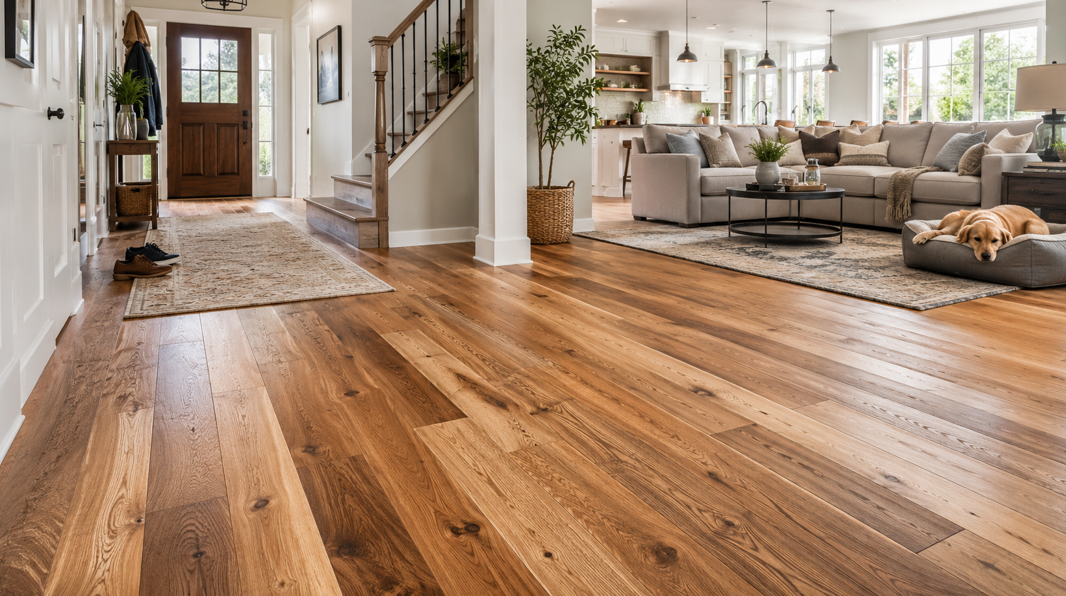
Why Hardwood Species Matters in a Busy Home
A busy household asks a lot from its flooring. Entryways collect outdoor grit, kitchens see spills, hallways handle constant movement, and family rooms become gathering places for children, guests, and pets. In a Dayton home with heavy foot traffic, the hardwood species you select can influence how well the floor resists dents, how noticeable everyday wear becomes, and how the surface ages.
Hardness matters, but it is only one part of durability. Grain pattern, color, finish, plank construction, installation quality, and maintenance habits also affect long-term performance. A very hard species with a dark, glossy finish may show fine scratches more clearly than a slightly softer wood with visible grain and a matte surface.
Homeowners can visit Floorco Flooring to compare hardwood species, finishes, colors, and construction options with guidance from a knowledgeable local team. Viewing larger samples in person can reveal grain variation, texture, and undertones that may not be obvious in photographs.
A strong flooring choice for an active home usually combines:
A species suited to the household’s activity level
A durable, manufacturer-approved finish
A grain pattern that helps disguise minor marks
A practical color for the room
Professional installation over a properly prepared subfloor
Regular care that limits grit, moisture, and furniture damage
The best species is not always the hardest wood available. It is the one that balances durability, appearance, maintenance, and the way the household lives.
What Heavy Foot Traffic Means for Hardwood
Heavy traffic is not limited to commercial spaces or large families. A smaller household may place concentrated wear on flooring when it has pets, regular visitors, an exterior door near the living area, or a narrow hallway used throughout the day.
Common high-traffic areas include:
Foyers and mudrooms
Hallways
Kitchens
Family rooms
Open-plan living areas
Stair landings
Home offices
Rooms near patios or garages
Wear is rarely distributed evenly. People tend to follow the same routes between the front door, kitchen, stairs, and primary seating areas. Dining chairs move repeatedly across one section of flooring, while rolling office chairs can place constant pressure on another.
Dayton’s seasonal conditions add another consideration. Rain, snow, road salt, and outdoor debris can be tracked inside. Winter heating can produce dry indoor air, while warmer months may bring higher humidity.
Every real wood species responds to its environment. Choosing a durable species helps, but entrance mats, cleaning routines, humidity control, furniture protection, and prompt spill care remain important.
Understanding Hardwood Hardness Ratings
Hardwood species are often compared using the Janka hardness test. This laboratory test measures the force required to press a steel ball into the wood to a specified depth. A higher rating generally indicates stronger resistance to denting and indentation.
The rating provides useful information, but it is not a complete durability score.
What a Janka Rating Tells You
The test helps compare the relative hardness of different species. Hickory, for example, is harder than red oak, while walnut is softer than both.
This difference may matter in homes where dropped objects, heavy furniture, large pets, or concentrated traffic are common.
What a Janka Rating Does Not Tell You
The rating does not measure:
Scratch resistance
Finish quality
Moisture performance
Dimensional stability
Sunlight-related color changes
How visible a mark will be
Installation quality
Ease of maintenance
Many scratches affect the protective finish before reaching the wood itself. A hard species may resist dents but still show surface scratches, especially when the flooring is dark, smooth, and glossy.
Grain and color can be just as important. A visible grain pattern may help hide minor marks, while a uniform surface can make them easier to notice.
Hickory for Maximum Natural Character and Dent Resistance
Hickory is one of the hardest widely available domestic hardwood species. It is known for bold grain, strong color variation, and good resistance to dents and impacts.
These qualities make it worth considering for kitchens, hallways, family rooms, and homes with active children or large dogs.
Advantages of Hickory
Hickory’s varied appearance can help disguise everyday wear. Individual boards may include cream, tan, brown, knots, and mineral streaks. A small dent or scratch may blend into this natural movement more easily than it would on a smooth, uniform floor.
Its hardness also makes it a practical option for areas where dropped objects and concentrated furniture weight are concerns.
Design Considerations
Hickory is visually active. In a large, open room, its variation can add warmth and personality. In a compact room with patterned furniture, detailed cabinets, and colorful walls, it may feel busy.
Homeowners who want a calmer hickory floor can look for:
A more selective grade
A narrower range of colors
A consistent stain
Wider planks
A matte or satin finish
Hickory works particularly well in farmhouse, rustic, transitional, and casual interiors where the floor is intended to become a noticeable design feature.
White Oak for Balanced Performance and Versatile Style
White oak offers a useful balance of hardness, visible grain, and design flexibility. It is one of the strongest all-around choices for busy Dayton homes.
Its natural color typically includes beige, tan, and soft brown tones. Manufacturers offer it in numerous stains, plank widths, textures, and engineered constructions.
Why White Oak Works in High-Traffic Rooms
White oak has enough grain to soften the appearance of minor wear without looking as visually active as hickory. This makes it suitable for kitchens, living rooms, entries, hallways, and whole-home installations.
Wire-brushed white oak can be especially practical. The subtle texture emphasizes the grain and may make small surface marks less noticeable.
Design Flexibility
White oak can be finished in pale natural colors, warm medium browns, muted greige tones, and deeper stains. It complements modern farmhouse, contemporary, Scandinavian-inspired, transitional, and traditional interiors.
For homeowners who want durability without a strongly rustic appearance, white oak is often an excellent starting point.
Red Oak for Classic Style and Everyday Use
Red oak has been used in American homes for generations. Its pronounced grain and warm undertones create a familiar hardwood appearance.
It is not as hard as hickory or hard maple, but it can perform reliably in active households when combined with a durable finish and consistent care.
Practical Benefits
The strong grain can help break up the appearance of minor scratches, dust, and everyday surface changes. This makes red oak a practical option for hallways, family rooms, dining rooms, and other frequently used spaces.
Natural red oak may display pink, amber, or reddish undertones. Different stains can shift the overall appearance toward warm brown, neutral, or deeper shades, although the underlying grain remains visible.
Best Uses
Red oak is well suited to homeowners who want:
A classic hardwood look
Noticeable natural grain
Broad stain availability
A familiar material for an established home
Practical performance without an extremely rustic design
It may show dents sooner than hickory, but a forgiving color and low-sheen finish can help the floor age attractively.
Hard Maple for a Clean Look and Strong Dent Resistance
Hard maple is known for its light natural color, subtle grain, and strong resistance to denting. It can be a good option for hallways, living areas, bedrooms, and home offices.
Why Homeowners Choose Maple
Maple creates a clean, refined foundation. Its smooth appearance suits contemporary, minimalist, and transitional interiors where the floor is intended to support the room rather than dominate it.
Its hardness is helpful in active homes, particularly where furniture weight or dropped objects are concerns.
What to Consider
Because maple has a more uniform grain than oak or hickory, scratches and dents may be easier to see. Light colors and matte finishes can reduce contrast and make normal surface changes less obvious.
Maple may also accept stain differently from oak. Homeowners should view the exact finished product rather than selecting it from a generic stain sample.
Hard maple is most suitable for people who value a light, consistent appearance and strong dent resistance over bold natural character.
Is Walnut Suitable for Heavy Traffic?
Walnut is valued for its deep brown color and elegant grain, but it is softer than hickory, oak, and hard maple.
It may work well in bedrooms, studies, formal living rooms, or households that are comfortable with natural wear becoming part of the floor’s character. In an entryway, busy kitchen, or main hallway, it may dent more readily than harder species.
Walnut can still be used successfully when the homeowner understands the tradeoffs. A durable finish, protective mats, furniture pads, and regular cleaning can help preserve its appearance.
For a busy home, walnut is generally a design-led choice rather than the first recommendation for maximum dent resistance.
Solid or Engineered Hardwood for Active Homes
Species describes the visible wood, while construction describes how the flooring is made. Both need to be considered.
Solid hardwood is milled from one piece of wood. Engineered hardwood has a real hardwood surface over a layered core.
Homeowners can explore hardwood flooring in both constructions while comparing species, finish, plank width, installation method, and warranty coverage.
When Solid Hardwood May Work
Solid hardwood is commonly installed over wood subfloors in above-grade rooms. Depending on its thickness, condition, and manufacturer requirements, it may offer future refinishing potential.
It still responds to indoor humidity, so correct acclimation, expansion space, and climate management matter.
When Engineered Hardwood May Work
Engineered hardwood is designed to offer greater dimensional stability in certain environments. It may be suitable for concrete subfloors, wider planks, and locations where solid wood is not the preferred construction.
Not all engineered products are equal. The real wood surface thickness, core quality, approved installation methods, and refinishing potential vary.
Construction does not replace species selection. An engineered hickory floor still has a hickory surface, while an engineered walnut floor retains walnut’s natural hardness.
Why the Finish Matters as Much as the Species
The finish protects the wood surface from everyday contact. In many situations, it is the first line of defense against scratches, stains, and wear.
Factory-Applied Finishes
Prefinished hardwood receives its coating under controlled factory conditions. These products may offer strong wear performance and can be installed without on-site sanding and finishing.
Homeowners should compare warranty terms and maintenance requirements rather than assuming every factory finish performs the same way.
Site-Applied Finishes
Site-finished hardwood is sanded and coated after installation. This can create a more continuous surface with fewer noticeable bevels between boards.
Performance depends on the selected finish system, application quality, curing time, cleaning habits, and household activity.
Sheen Level
Matte and satin finishes are often practical in active homes. They reflect less light and may show fewer fine scratches, dust particles, and traffic patterns.
Glossy finishes can create a formal appearance, but surface marks may become more visible.
Surface Texture
Wire-brushed and lightly textured surfaces can help disguise everyday changes. Deep scraping creates a more rustic look and may influence how the floor is cleaned.
Texture should support both the desired style and the household’s maintenance preferences.
Choosing a Color That Conceals Wear
Color affects how visible dust, scratches, pet hair, and dents become.
Medium Natural Colors
Medium oak, caramel, warm brown, and natural wood tones are often the most forgiving. They provide enough variation to soften the appearance of debris and minor marks without making a room feel dark.
Light Hardwood
Light floors can hide pale dust and some scratches while helping rooms feel bright and open. Dark pet hair, mud, or tracked soil may be more noticeable.
Dark Hardwood
Deep brown and nearly black floors can look dramatic, but they commonly show lint, dust, pet hair, and scratches more clearly.
Homeowners who prefer a dark floor may find a visible grain pattern, low sheen, and slightly varied color easier to maintain than a flat, uniform finish.
Best Species for Different High-Traffic Rooms
Each room places different demands on hardwood.
Entryways and Hallways
Hickory, white oak, and hard maple are strong candidates for concentrated traffic. Medium colors and visible grain can help disguise daily wear.
Suitable entrance mats and frequent grit removal remain essential.
Kitchens
White oak and hickory combine useful dent resistance with attractive grain. Red oak can also perform well when it has a durable finish and spills are cleaned promptly.
No real hardwood floor is waterproof. Plumbing leaks, standing water, and excessive moisture require immediate attention.
Family Rooms
White oak offers broad style flexibility, while hickory suits homeowners who want stronger natural variation. Red oak remains a practical option for a classic look.
The floor should coordinate with seating, rugs, pets, and the room’s primary walking paths.
Home Offices
Hard maple, white oak, and hickory may resist dents from furniture effectively, but rolling chairs can still damage the finish.
Use manufacturer-approved chair protection and quality pads beneath desks, cabinets, and other heavy furniture.
Stairs
Stair treads receive concentrated impact near their centers. Hardness is helpful, but secure installation, matching stair components, finish quality, and regular cleaning are equally important.
Selecting Hardwood for Homes With Pets
No hardwood floor is completely pet-proof, but some combinations are more forgiving than others.
Helpful features include:
Harder species such as hickory or hard maple
Visible natural grain
Light or medium colors
Matte or satin finishes
Light surface texture
A durable manufacturer-approved coating
Pet nails can scratch the finish even when the wood beneath it is hard. Regular nail care, prompt accident cleanup, entrance cleaning, and rugs in active areas can help.
Very dark, smooth, glossy floors tend to display pet hair and fine scratches more clearly than textured floors with natural color variation.
Installation and Subfloor Preparation Still Matter
Even the hardest species can perform poorly when installed over an unsuitable base.
The subfloor needs to be clean, dry, stable, and sufficiently flat. Moisture testing, fastening loose panels, repairing damaged areas, and planning transitions may be necessary before installation begins.
Installers also need to consider:
Manufacturer acclimation requirements
Expansion space
Indoor temperature and humidity
Board direction
Plank blending
Door clearances
Stair components
Adjoining floor heights
Approved fasteners or adhesives
Natural grain and color variation should be distributed thoughtfully across the room. Opening and blending boards from multiple cartons can help prevent similar planks from clustering in one area.
Professional installation supports secure connections, balanced layouts, appropriate expansion space, and compliance with product requirements.
Caring for Hardwood in High-Traffic Areas
Routine maintenance often has a greater effect on appearance than a small difference in species hardness.
Remove Outdoor Grit
Sand, salt, and outdoor debris can act like abrasive material under shoes. Remove particles regularly with a soft broom, dust mop, or suitable vacuum attachment.
Use Suitable Entrance Mats
Place approved mats at exterior doors to collect moisture and dirt. Check that the backing is compatible with the flooring finish.
Protect Furniture
Use quality pads beneath chairs, tables, sofas, and cabinets. Replace worn pads because trapped grit can scratch the surface.
Lift heavy furniture instead of dragging it.
Clean Spills Promptly
Follow the manufacturer’s approved cleaning method. Avoid steam cleaners, excessive water, harsh chemicals, waxes, and unapproved homemade mixtures.
Manage Indoor Humidity
Real wood expands and contracts as humidity changes. Maintain the indoor conditions recommended for the exact flooring product.
Use actual humidity readings when deciding whether the home needs a humidifier or dehumidifier.
Expect Natural Character
Small scratches, dents, and color changes may develop over time. Many homeowners view these changes as part of the authentic character of real wood.
A forgiving grain, medium color, and low-sheen finish can help normal wear blend into the floor.
Choosing the Best Species for Your Dayton Home
There is no universal winner, but a few simple comparisons can narrow the decision:
Choose hickory for strong dent resistance and bold natural character.
Choose white oak for balanced durability, visible grain, and style flexibility.
Choose red oak for a classic appearance and practical everyday performance.
Choose hard maple for a clean, light look with good dent resistance.
Choose walnut when rich color matters more than maximum hardness.
Before purchasing, ask:
Which rooms receive the most traffic?
Are pets, children, or frequent guests part of daily life?
Is dent resistance or scratch visibility the larger concern?
Will the grain and color help conceal normal wear?
Is solid or engineered construction more suitable?
What finish and sheen are available?
What maintenance does the manufacturer recommend?
Does the subfloor require repair or moisture testing?
Are matching stair components and trim available?
What warranty applies to the exact product?
Bring room measurements, photographs, cabinet samples, paint colors, and information about household activity when comparing products. These details help the flooring team recommend options that meet both design and performance needs.
Ready to compare durable hardwood species for your busiest rooms? Get in touch with the Floorco Flooring team for personalized product and professional installation guidance.


